Discover Scientific Knowledge

Showing results for: "quantum" (12 results)

Unveiling the Mysteries of Quantum Computing
Tech & AI

Unveiling the Mysteries of Quantum Computing

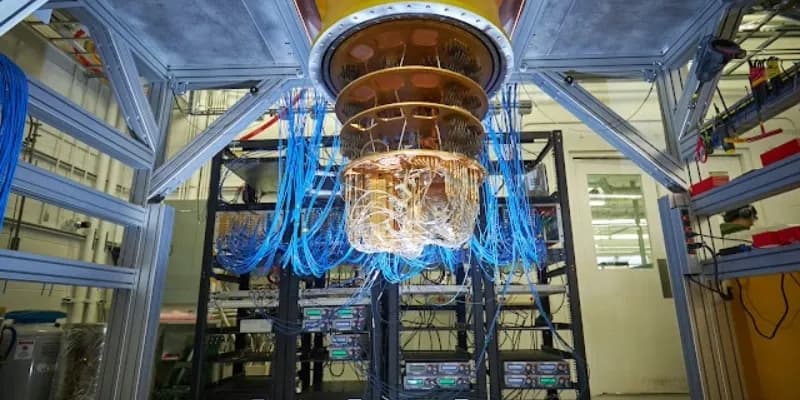
Quantum computing represents a revolutionary advancement in computational capabilities. Unlike traditional computers, which use bits as the smallest unit of data, quantum computers utilize quantum bits or qubits. These qubits can exist in multiple states at the same time due to the principles of superposition and entanglement.
The Planck Scale: Where Our Best Physical Descriptions Meet Their Shared Boundary
Science & Research

The Planck Scale: Where Our Best Physical Descriptions Meet Their Shared Boundary

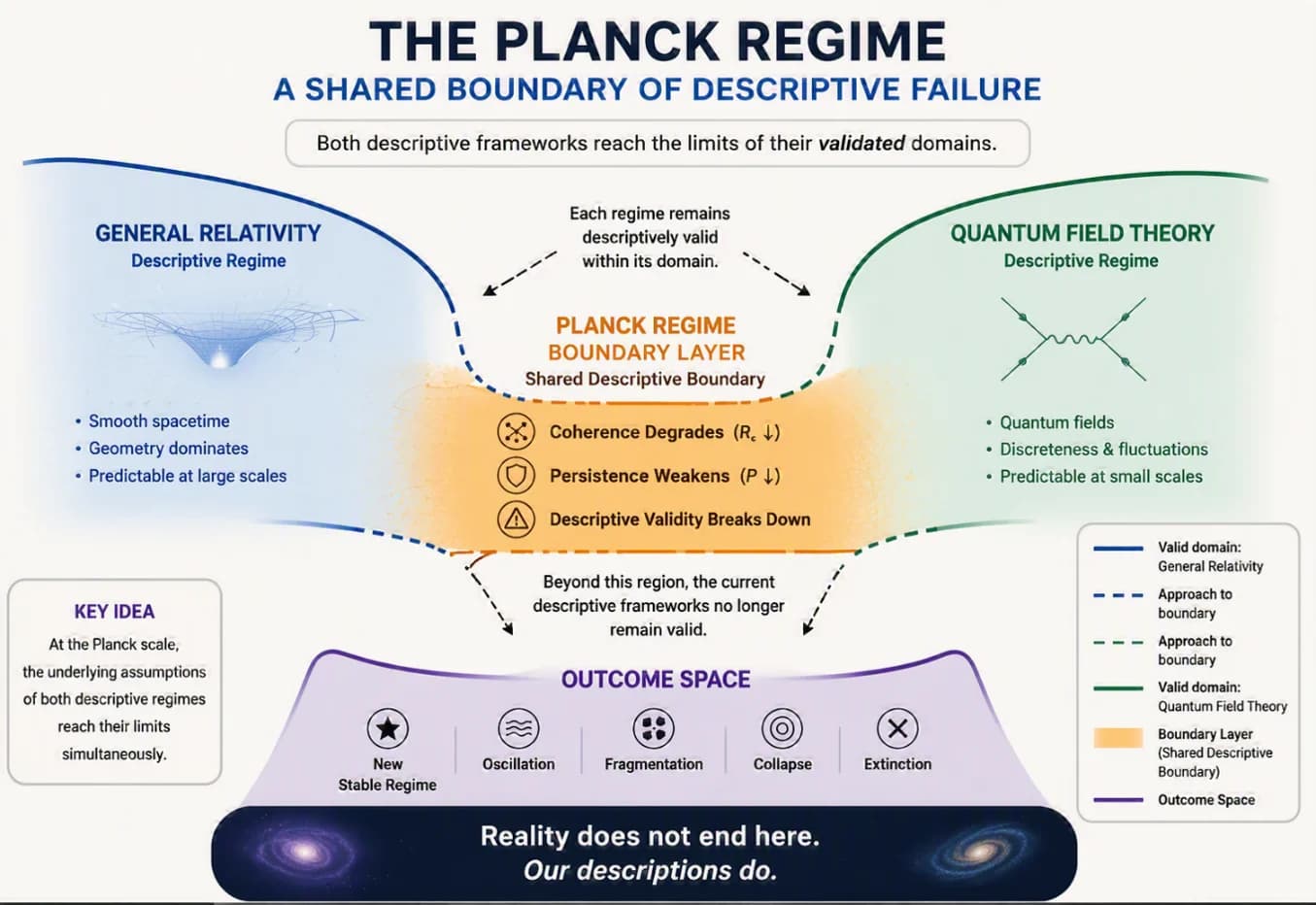
Few concepts in modern physics carry as much significance—or as much mystery—as the Planck scale. It is the regime where gravitational effects become comparable to quantum effects, suggesting that both General Relativity and Quantum Field Theory should contribute to our description of nature.

The Beauty and Power of Mathematics
Science & Research

The Beauty and Power of Mathematics

Mathematics is often described as the universal language of the universe, a field that transcends cultures and eras to provide the tools for understanding the world. From the ancient geometries of Egypt to modern computational algorithms, mathematics is at the heart of human discovery and technological progress.

The Flip: Why Relational Field Theory Starts Where Most Physics Ends
Science & Research

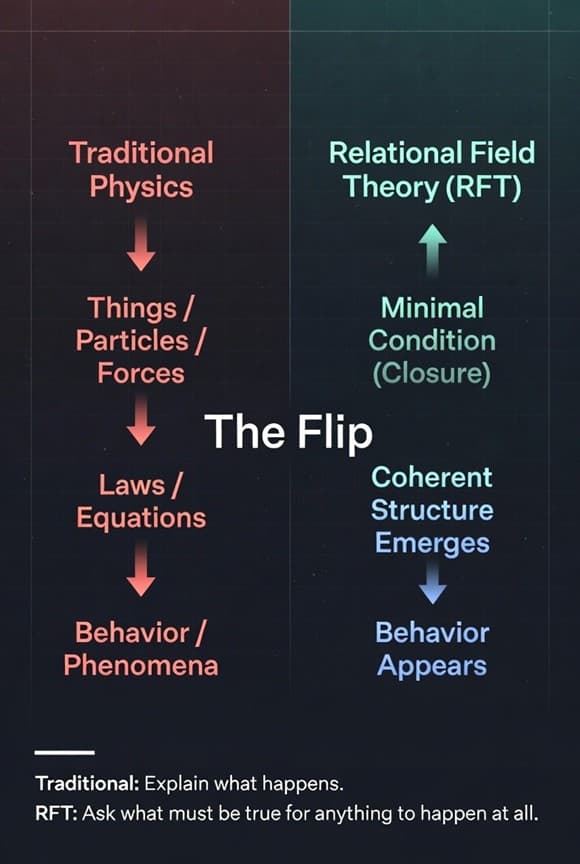
The Flip: Why Relational Field Theory Starts Where Most Physics Ends

We begin with things - particles, fields, forces - and then build laws and equations to explain how those things behave. This approach has been extraordinarily successful. It is how we arrived at quantum mechanics, general relativity, and the Standard Model.

Why a Stable Universe Cannot Support Unnecessary Structure
Science & Research

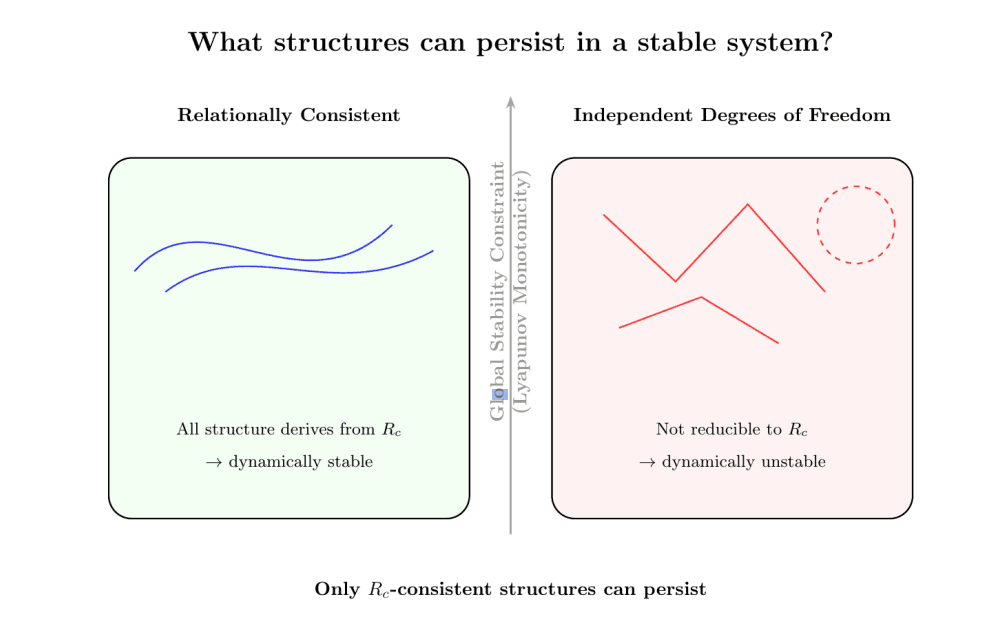
Why a Stable Universe Cannot Support Unnecessary Structure

Modern physics often assumes that the complexity we observe in the universe reflects an underlying complexity in its fundamental structure. Fields, particles, forces, and geometries are typically introduced as independent components, each carrying its own degrees of freedom.