
Epigenetics: the science of what makes you, you.
I humbly state, dear reader, that everything you learned about genetics in your 9th grade biology class was wrong. Well, not wrong exactly, but vastly oversimplified.
Most of us learned the classical view: genes are the instruction manual for building your body. Then, your cells follow this code to build proteins, and the story ends there.
Modern neuroscience has revealed something far more interesting. Epigenetics studies how experiences alter gene activity without changing the DNA sequence itself[1]. These molecular changes influence memory, decision-making, stress resilience, and mental health, revealing that who we are arises from the dynamic interaction between biology and environment[2].
In this article, I explore how epigenetic mechanisms work, highlight the role of a key enzyme involved in neural function, and examine how subtle molecular changes in the brain can shape behavior and cognition, with important implications for psychiatric disease and treatment.
Your genes are never sitting still.
- Epigenetics vs Genetics:
The human genome has been successfully sequenced, with the first complete reference genome published in 2022, yet much about the brain and human biology remains a mystery[3]. To understand why, we must first understand how genes and the epigenome differ.
Think of your DNA as a vast collection of architectural plans, with each blueprint assigned a specific role for building the body. The epigenome manages these blueprints, determining which instructions are followed, which are ignored, and when specific projects should begin. This is a simple explanation as to why brain cells behave differently from skin or liver cells despite sharing the exact same DNA[4].
Unlike the stable genetic code of “A,” “T,” “C,” and “G,” the epigenome is remarkably flexible, constantly responding to experiences and the environment. Learning a new skill, chronic stress, sleep patterns, diet, and even social relationships can all leave molecular marks that alter gene activity throughout the brain and body[5].
This flexibility allows extraordinary complexity to emerge from just four letters of genetic code, with countless combinations of genes being turned on and off over one’s lifetime. But it also means that our experiences can leave lasting biological marks, good or bad. Adverse experiences may contribute to mental disorders, whereas positive experiences can promote beneficial changes in the brain[6].
- Chromatin Dynamics within the Epigenome:
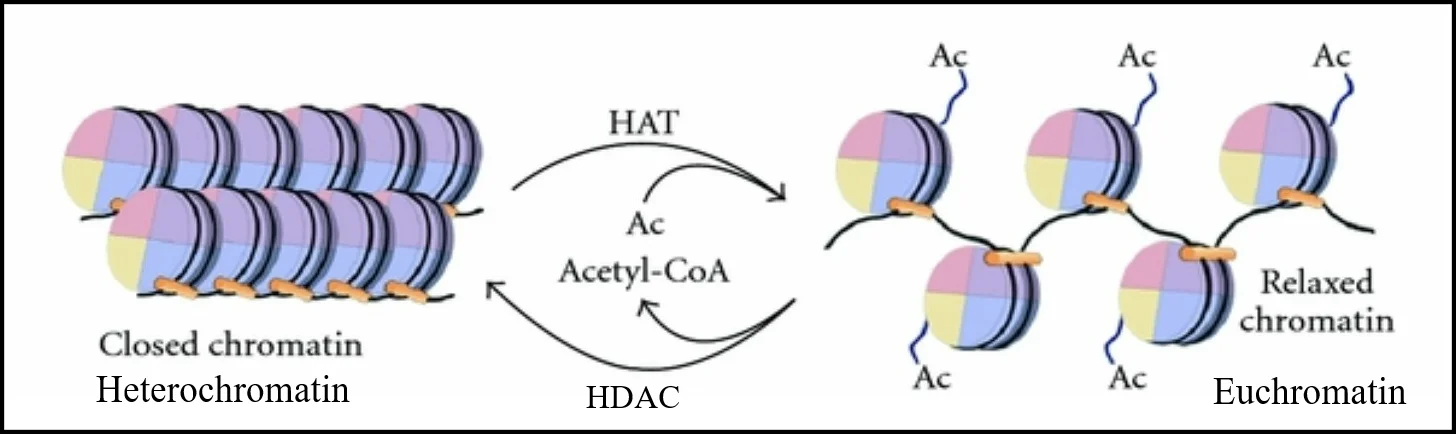
To understand how this process works (and what an epigenome even is), we need to zoom into the microscopic world. Grab your preferred microscope, and let’s go.
Inside your cells, DNA is tightly wrapped around proteins called histones, forming a structure known as chromatin[7]. When chromatin is open, genes are more accessible to be read (“euchromatin”). When chromatin becomes tightly packed, genes become difficult to access and are effectively silenced (“heterochromatin”).
The regulation of chromatin accessibility is controlled by specialized proteins known as epigenetic enzymes: hundreds of tiny construction foremen controlling what may be built and when[8]. Through their coordinated actions, these enzymes create an additional layer of biological information known as the epigenetic code, forming what we know as the epigenome[9]. We therefore possess a code within a code: a stable genetic sequence overlaid by a dynamic epigenetic system. In the words of a dear post-doc I used to work with, “Biology is complicated!”
In the brain, this process is especially important. Chromatin remodeling allows neurons to adapt during learning, reward processing, stress exposure, development, decision-making, and aging[10]. Our internal and external experiences influence how genes function, allowing the brain to continually change throughout one’s lifetime.
Histone Deacetylases are little proteins with massive consequences.
One of the major molecular systems involved in epigenetic regulation is a family of enzymes known as histone deacetylases, or HDACs.
HDACs generally act by tightening chromatin structure, making certain genes less accessible for transcription[11]. Through this regulation, HDACs help fine-tune neuronal function and maintain the balance necessary for learning and adaptation[12]. Like many biological systems, the brain operates within a "Goldilocks zone": too little activity can be harmful, but too much can be equally problematic. Although these molecular changes may seem subtle, their effects on behavior can be profound.
Researchers have linked HDAC activity to learning, memory formation, addiction, emotional regulation, anxiety, and decision-making[13]. Pioneering work from Eric Nestler and colleagues has demonstrated that drugs such as cocaine induce histone modifications in reward-related brain regions[14]. These epigenetic changes influence gene expression and may contribute to persistent drug-related behaviors seen in addiction. Importantly, the specific effects depend on the timing, duration, and amount of drug exposure, with much to still be understood[15].
In animal models, experimentally manipulating HDAC function alters responses to rewards, stress, and risky situations[16–18]. Recently, my work in the Roesch lab at the University of Maryland, in collaboration with Dr. Anna Li, found that overexpression of HDAC5 in the rat brain increased motor impulsivity[19]. This epigenetic manipulation impaired the animals' ability to inhibit actions, providing insight into how dysregulated gene activity may contribute to impulsive behavior in specific dimensions.
My doctoral work aims to extend this framework by examining how the same epigenetic manipulation affects other forms of impulsivity and decision-making within the same brain region. These studies may help identify neural circuits that are particularly sensitive to epigenetic regulation and reveal potential targets for future therapies. Translating these findings to humans, however, may take some time. And many microscopes.
Histone Deacetylase as Cognitive Enhancers.
Encouragingly, studies in animal models suggest that drugs specifically targeting the regulation of HDAC function may modify maladaptive patterns of gene expression and behavior that occur from environmental stress[20]. Although translating these findings into clinical treatments remains challenging, epigenetic therapies represent a promising new avenue for disorders with high relapse rates and relatively ineffective current therapies, such as substance abuse.
These drugs are generally classified under the umbrella of HDAC inhibitors, which reduce HDAC activity [21]. Since HDACs generally act as brakes on gene activity, inhibiting them can sometimes help restore a healthier balance of gene expression when activity is dysregulated[22]. More simply, two negatives may make a positive (though in biology, it is rarely this straightforward).
Studies in animal models suggest that HDAC inhibitors can improve memory, enhance learning, and increase cognitive flexibility under certain conditions[23,24]. Researchers are also exploring their potential use in disorders such as depression, post-traumatic stress disorder, and substance abuse[25]. Others are investigating whether HDAC inhibition may alleviate age-related cognitive decline or serve as an aid in neurodegenerative disorders such as dementia[26].
These exciting avenues of research suggest that epigenetics may represent one of the final frontiers in understanding both typical and atypical mental functioning. Although many questions remain, this growing knowledge may one day lead to therapies capable of restoring healthy patterns of brain function and improving quality of life for those affected by psychiatric and neurodegenerative disorders.
So, while it is not possible to go out and buy HDAC inhibitors just yet, it may be soon on the horizon- or your local CVS and other distributors.
Science fiction or reality… or both?
Epigenetics is vastly more complex than scientists once imagined. Researchers are only beginning to understand how experiences shape gene activity across the lifespan and how these changes influence behavior and cognition, with direct ties to one’s overall mental health.
The future of epigenetics may involve therapies that target the complex systems controlling gene expression rather than simply treating symptoms or utilizing drugs with a broad range of side effects. At the same time, the possibility of cognitive enhancement raises major ethical and philosophical questions about identity, free will, and what it means to alter the biology of your brain or the brains generations after you. What is considered as too much editing to one's inherent epigenome, and who would decide when to administer this therapy and to which populations?
So, I prompt the question:
If you could change your genes, would you?


Discussion