
Introduction
The kidneys perform some of the most important jobs in the human body, yet many people rarely think about them until a problem develops. These bean-shaped organs continuously filter waste products, excess fluids, and toxins from the blood while helping regulate blood pressure, electrolyte balance, and red blood cell production.
Because kidney disease can develop silently over many years, early detection is essential. Unfortunately, symptoms often do not appear until significant kidney damage has already occurred. This is where Kidney Function Tests become invaluable.
Kidney function tests are a group of laboratory investigations used to assess how well the kidneys are working. These tests help healthcare professionals detect kidney problems early, monitor existing kidney disease, and evaluate the effectiveness of treatment.
Understanding what these tests measure can help individuals take a more active role in protecting their kidney health.
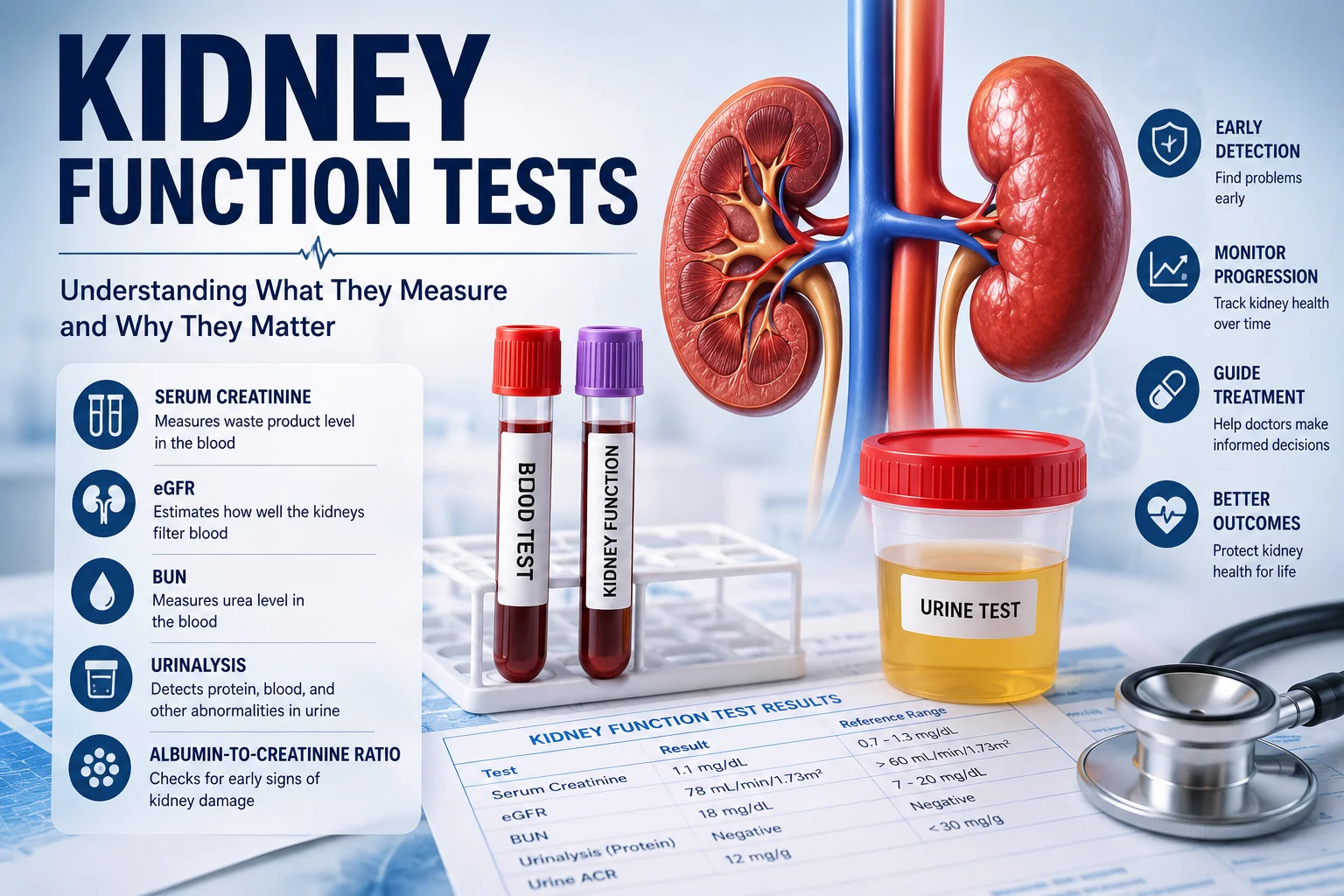
What Are Kidney Function Tests?
Kidney Function Tests (KFTs) are a collection of blood and urine tests used to evaluate the kidneys' ability to filter waste products and maintain normal body functions.
Rather than relying on a single measurement, healthcare providers typically assess several markers to gain a comprehensive picture of kidney health. These tests can identify reduced kidney function, detect signs of kidney damage, and help determine whether further evaluation is needed.
Kidney function testing is commonly recommended for individuals with risk factors such as:
Diabetes
High blood pressure
Heart disease
Obesity
Family history of kidney disease
Advanced age
Regular monitoring is especially important because chronic kidney disease often progresses without obvious symptoms during its early stages.
Key Blood Tests Used to Assess Kidney Function
Several blood tests provide valuable information about how effectively the kidneys are filtering the blood, and they usually include:
Serum Creatinine
Creatinine is a waste product generated by normal muscle activity. Healthy kidneys remove creatinine from the bloodstream and excrete it in urine.
When kidney function declines, creatinine levels in the blood begin to rise. Elevated serum creatinine may indicate impaired kidney function, although results should always be interpreted alongside other clinical findings.
Estimated Glomerular Filtration Rate (eGFR)
The estimated glomerular filtration rate (eGFR) is one of the most important indicators of kidney health. It estimates how much blood the kidneys filter each minute.
An eGFR result can help healthcare providers determine:
Whether kidney function is normal
The stage of chronic kidney disease
How quickly kidney disease may be progressing
Lower eGFR values generally indicate reduced kidney function.
Blood Urea Nitrogen (BUN)
Urea is a waste product formed when the body breaks down protein. The kidneys normally remove urea from the blood.
Elevated blood urea nitrogen (BUN) levels may suggest impaired kidney function, dehydration, or other medical conditions that affect waste elimination.
Urine Tests and What They Reveal About Kidney Function
While blood tests evaluate filtration, urine tests can provide direct evidence of kidney damage. Two important urine tests to assess kidney function include:
Urinalysis
A routine urinalysis examines the physical and chemical characteristics of urine. It is able to detect:
Protein
Blood
Glucose
Infection
Abnormal cells
The presence of these substances may indicate kidney disease or other health conditions.
Urine Albumin-to-Creatinine Ratio (uACR)
One of the earliest signs of kidney damage is the leakage of protein into the urine.
The urine albumin-to-creatinine ratio measures the amount of albumin in relation to creatinine. Elevated levels may suggest early kidney damage, particularly in individuals with diabetes or hypertension.
Because protein leakage can occur long before kidney function declines significantly, this test plays a critical role in early detection.
Why Are Kidney Function Tests Important?
Kidney function tests serve several important purposes in modern healthcare. Some of those important purposes include:
Early Detection of Kidney Disease
Many forms of kidney disease develop gradually and without symptoms. Routine testing can identify abnormalities before irreversible damage occurs.
Monitoring Chronic Conditions
People living with diabetes, hypertension, and cardiovascular disease often undergo regular kidney function testing because these conditions increase the risk of kidney damage.
Guiding Treatment Decisions
Healthcare providers use kidney function test results to make informed decisions about treatment plans, medication dosing, and specialist referrals.
Evaluating Treatment Effectiveness
For patients already diagnosed with kidney disease, regular testing helps determine whether treatments are working and whether disease progression is being slowed.
Factors That Can Influence Kidney Function Test Results
Kidney function test results are not always influenced solely by kidney disease. Several factors can affect measurements and should be considered during interpretation.
These factors include:
Age
Muscle mass
Hydration status
Recent illness
Certain medications
Dietary habits
For example, individuals with greater muscle mass may naturally have higher creatinine levels without underlying kidney problems. This is why healthcare professionals interpret test results alongside medical history, physical examination findings, and additional investigations.
The Role of Medical Laboratories in Kidney Function Testing
Accurate kidney function assessment depends heavily on high-quality laboratory testing. Medical laboratory professionals play an essential role in ensuring reliable results through proper specimen handling, instrument calibration, quality control procedures, and adherence to standardized testing protocols.
Laboratory data often serve as the foundation for diagnosing kidney disease, monitoring progression, and evaluating treatment response. Without accurate laboratory measurements, healthcare providers would have limited ability to assess kidney health effectively.
As laboratory technology continues to advance, kidney function testing is becoming increasingly precise, supporting earlier diagnosis and improved patient outcomes.
Why Kidney Health Should Not Be Ignored
According to global health estimates, an estimated 674 millions people worldwide live with chronic kidney disease, many without knowing it. Left untreated, kidney disease can lead to serious complications including cardiovascular disease, kidney failure, and the need for dialysis or transplantation.
The encouraging news is that early detection and intervention can significantly improve outcomes. Lifestyle modifications, blood pressure control, diabetes management, and regular monitoring can help preserve kidney function and reduce the risk of complications.
Routine kidney function testing provides a simple yet powerful tool for identifying problems before they become severe.
Conclusion
Kidney Function Tests are among the most valuable tools in laboratory medicine for assessing kidney health and detecting disease early. By measuring markers such as creatinine, eGFR, blood urea nitrogen, and urine protein levels, healthcare professionals can gain critical insights into how well the kidneys are functioning.
Because kidney disease often develops silently, regular testing is especially important for individuals with risk factors such as diabetes and high blood pressure. Early diagnosis allows for timely intervention, better disease management, and improved long-term health outcomes.
Understanding the purpose and significance of kidney function tests empowers individuals to take a proactive approach to protecting one of the body's most essential organs.



Discussion