
Most people have heard of probiotics like the live bacteria marketed in yoghurts and supplements. Fewer have heard of postbiotics, and fewer still of bacterial lysates. Yet these compounds have been prescribed in Europe for decades and are now at the center of a scientific renaissance. As antimicrobial resistance makes antibiotics less reliable, researchers are looking to a different strategy: training the immune system to fight respiratory infections before they start. Bacterial lysates may be among the most underappreciated tools in that effort.
What Are Postbiotics, and Why Do They Matter?

Postbiotics are defined as preparations of inanimate microorganisms and/or their components that confer a health benefit on the host (Salminen et al., 2021). Unlike probiotics, they contain no living organisms. This distinction matters enormously for safety: because they are inactivated, postbiotics carry no risk of causing infection, making them suitable even for immunocompromised individuals — such as the elderly, transplant patients, and premature neonates — who could not safely receive live bacterial preparations (Yesilurt et al., 2021).
Postbiotics are a diverse category. They include cell wall fragments, metabolites, exopolysaccharides, teichoic acids, and peptidoglycans (Ma et al., 2023). Among them, bacterial lysates occupy a particularly interesting position: they are complex mixtures of disrupted bacterial cell components, designed not to infect but to inform.
From Disrupted Bacteria to Immune Education
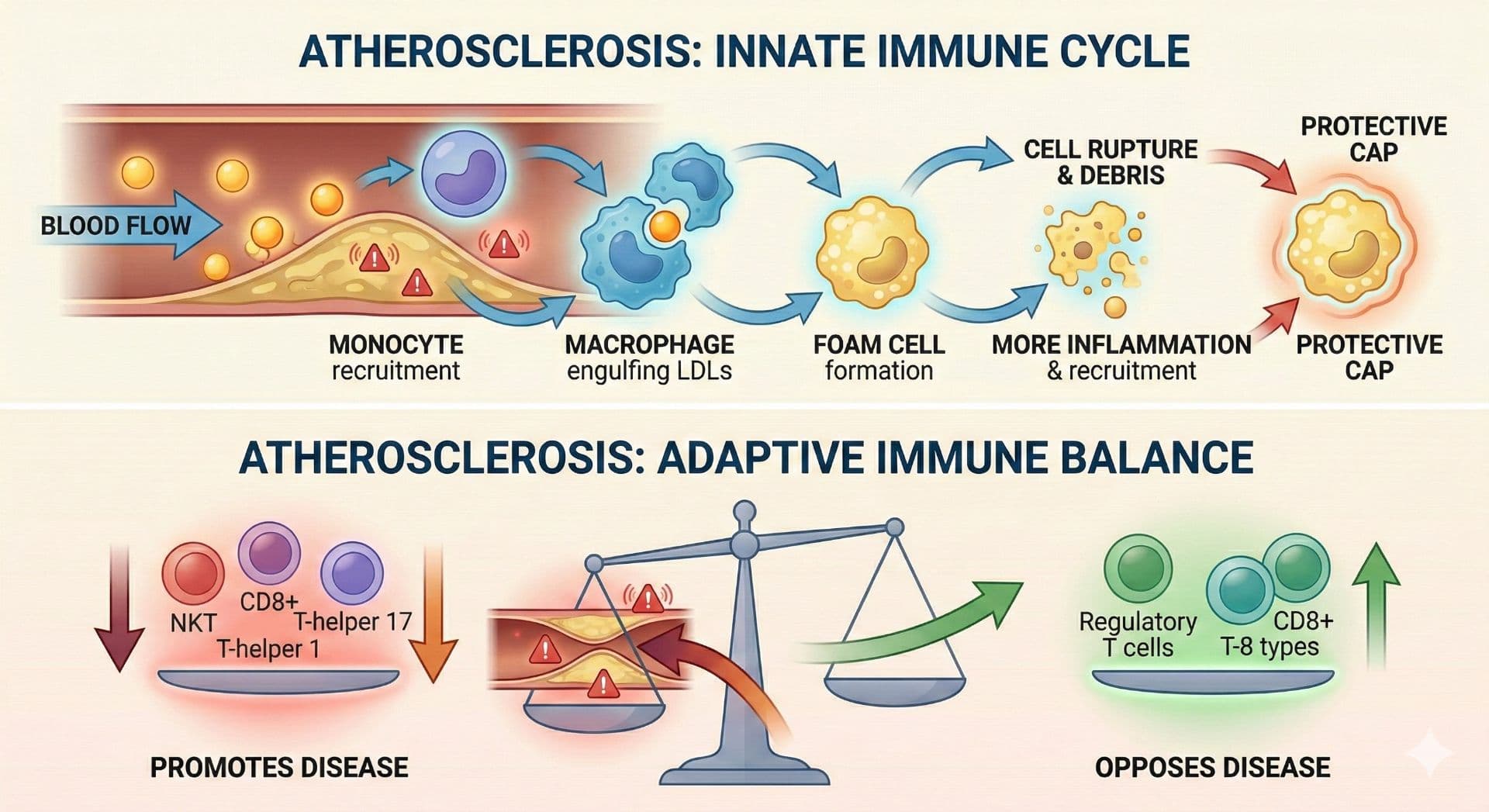
Bacterial lysates (BL) are produced by breaking down bacterial cells through chemical, mechanical, or thermal methods (Suarez et al., 2020). The resulting mixture contains fragments of bacterial cell walls, including lipopolysaccharides and peptidoglycans, which the immune system recognises as danger signals. These molecular patterns, known as pathogen-associated molecular patterns (PAMPs), bind to pattern recognition receptors — such as Toll-like receptors — on the surface of immune cells, triggering an immune response cascade (Kearney et al., 2015).
Commercially, the best-known product is OM-85, which contains lyophilised extracts from eight bacterial species commonly associated with respiratory infections, including Streptococcus pneumoniae, Haemophilus influenzae, and Staphylococcus aureus (De Benedetto & Sevieri, 2013). Taken orally, the lysate components interact with immune cells in the gut-associated lymphoid tissue, activating dendritic cells, promoting the production of secretory immunoglobulin A (sIgA), and ultimately generating a protective immune response in the respiratory tract (Esposito et al., 2018).
The Clinical Picture: Promising, But Contested
Evidence for bacterial lysates in preventing recurrent respiratory tract infections has been accumulating for decades. In children, several studies have demonstrated reductions in the frequency of respiratory infections following OM-85 treatment (Schaad, 2010). In adults with chronic obstructive pulmonary disease (COPD), BL therapy has been associated with fewer and less severe exacerbations, representing a genuine clinical benefit in a population with limited therapeutic options (Cazzola et al., 2012; Braido et al., 2007).
However, the picture is not uniformly positive. The European Medicines Agency (EMA) reviewed these products in 2019 and concluded that while they may help prevent recurrent respiratory infections, there is insufficient evidence to support their use in treating existing infections or preventing pneumonia. The agency called for additional clinical data to clarify effectiveness across different patient populations.
The core challenge is trial heterogeneity. Studies vary in dose, duration, patient population, and outcome measures, making it difficult to draw consistent conclusions. This scientific ambiguity has limited regulatory enthusiasm in some countries, even as the products remain widely used in others.
Why This Matters Now: The AMR Connection
The renewed interest in bacterial lysates is no coincidence. Antimicrobial resistance (AMR) is one of the defining global health challenges of this century. Respiratory tract infections account for a significant proportion of inappropriate antibiotic prescriptions, with estimates suggesting that up to 50% of antibiotic use in outpatient settings is unnecessary (Chandra Deb et al., 2022). Reducing the frequency of these infections through immune modulation could meaningfully reduce antibiotic consumption and slow the spread of resistance.
Beyond the AMR argument, the delivery route for bacterial lysates is itself evolving. While oral administration activates the gut-lung immune axis, research is now exploring pulmonary delivery — administering bacterial lysates directly by inhalation to target the respiratory immune system at the site of infection (da Silva, 2025). Early studies suggest that inhaled bacterial lysate formulations can generate stronger local mucosal IgA responses than oral equivalents, potentially offering more targeted protection with lower doses.
Looking Ahead
Bacterial lysates represent an old idea encountering a new moment. As the limits of antibiotics become clearer and the need for alternative immune strategies grows more urgent, these carefully engineered microbial fragments offer a compelling approach to respiratory infection prevention. The science is still maturing, and better-designed clinical trials are needed. But for a category of compounds that most people have never heard of, bacterial lysates are generating exactly the kind of scientific attention they deserve.



Discussion