
Introduction
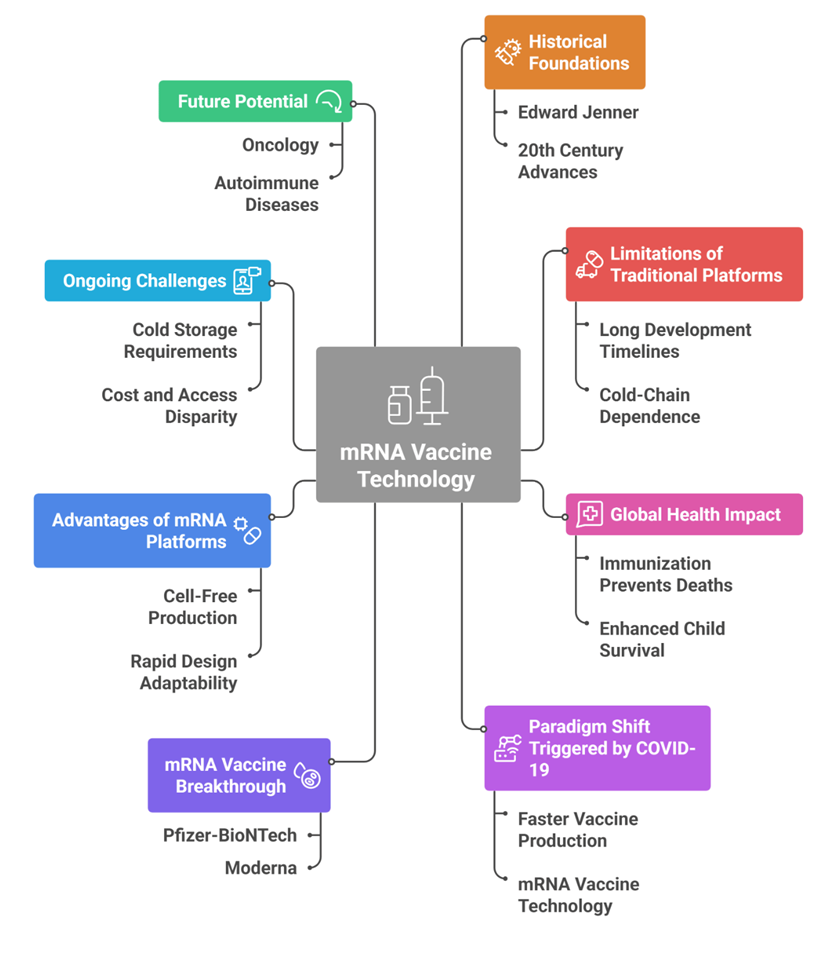
Messenger RNA (mRNA) vaccines represent one of the most significant scientific advances in modern therapeutics. Unlike conventional vaccines that use weakened or inactivated pathogens, mRNA vaccines deliver genetic instructions that enable host cells to synthesize a target antigen and stimulate an immune response. Their rapid development and successful deployment during the COVID-19 pandemic highlighted their effectiveness, adaptability, and safety. Today, mRNA technology is expanding beyond infectious diseases into oncology, autoimmune disorders, and personalized medicine, making it a major current trend in biology and medicine. Vaccines have historically played a crucial role in reducing morbidity and mortality worldwide. However, traditional vaccine platforms often involve lengthy production timelines, complex manufacturing, and cold-chain dependency. The emergence of mRNA vaccines addressed many of these limitations by allowing rapid design, scalable production, and precise antigen targeting. This has transformed the global vaccine landscape and accelerated next-generation therapeutic research (Pawar et al., 2026).
What are mRNA Vaccines?
mRNA vaccines contain laboratory-synthesized messenger RNA molecules that encode a specific protein antigen. After administration, the mRNA enters the cytoplasm of host cells, where ribosomes translate it into the target protein. The immune system recognizes this protein as foreign and mounts both antibody-mediated and cellular immune responses.
Unlike DNA-based therapies, mRNA does not enter the nucleus and does not integrate into the host genome. It is naturally degraded after protein translation, contributing to a favorable safety profile (Zhu et al., 2024).
Mechanism of Action
The mechanism of mRNA vaccines involves several steps:
1. Delivery of mRNA into cells through lipid nanoparticles (LNPs).
2. Release of mRNA into the cytoplasm.
3. Translation of mRNA into antigenic protein by ribosomes.
4. Presentation of antigen through major histocompatibility complex (MHC) pathways.
5. Activation of B cells and T cells.
6. Development of immunological memory.
Lipid nanoparticles are essential because they protect fragile mRNA from degradation and facilitate cellular uptake. Nanotechnology has therefore become a fundamental component of modern mRNA therapeutics (Srivastava et al., 2026).
Advantages of mRNA Vaccines
mRNA vaccines offer several advantages over traditional vaccine platforms:
Rapid design and manufacturing
No requirement for live pathogens during production
Strong humoral and cellular immunity
High adaptability against emerging variants
Scalable and cell-free manufacturing processes
Lower contamination risks
Potential for personalized treatment strategies
Their modular design enables researchers to quickly modify sequences in response to new pathogens or tumor mutations, making them valuable tools in future pandemic preparedness (Pawar et al., 2026).
Applications in Modern Therapeutics
1. Infectious Diseases
The first major success of mRNA vaccines was in preventing COVID-19. Vaccines developed by Pfizer / BioNTech and Moderna demonstrated high efficacy and significantly reduced severe disease and mortality. Researchers are now exploring mRNA vaccines for influenza, rabies, Zika virus, HIV, malaria, and tuberculosis (Pawar et al., 2026).
2. Cancer Immunotherapy
One of the most promising therapeutic applications is cancer treatment. mRNA vaccines can encode tumor-associated antigens or patient-specific neoantigens, stimulating the immune system to recognize and destroy malignant cells.
In melanoma, personalized mRNA vaccines combined with checkpoint inhibitors have shown encouraging outcomes. These vaccines may improve recurrence-free survival and generate durable T-cell responses (Plewa et al., 2026).
Similarly, mRNA oncology platforms are being explored for lung cancer, pancreatic cancer, colorectal cancer, and head and neck cancers. Personalized cancer immunization is considered a major frontier of precision medicine (Parganiha et al., 2026).
3. Personalized Medicine
mRNA technology enables individualized treatment by designing vaccines specific to a patient’s tumor mutation profile. This approach can improve treatment specificity while reducing damage to healthy tissues.
4. Autoimmune and Allergic Disorders
Researchers are investigating tolerogenic mRNA constructs that may retrain the immune system in diseases such as multiple sclerosis, type 1 diabetes, and allergic conditions. Although still experimental, these applications highlight the broad therapeutic potential of mRNA platforms (Pawar et al., 2026).
Role of Nanotechnology in mRNA Therapeutics
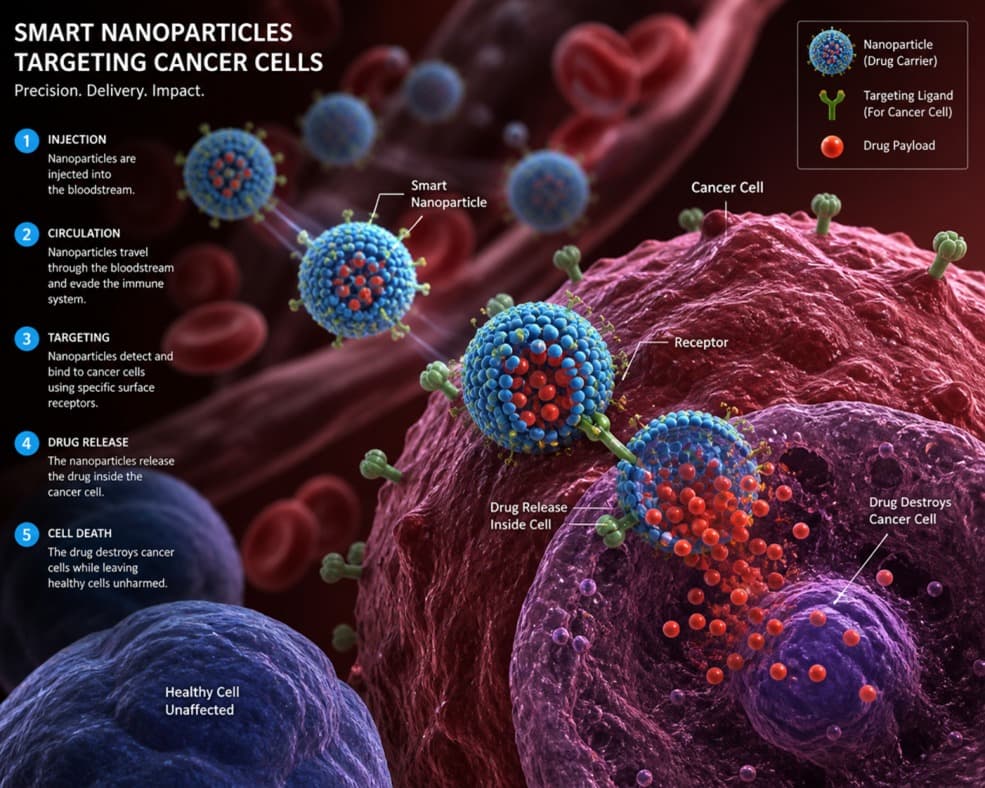
Nanotechnology plays a vital role in mRNA vaccine success. Naked mRNA is unstable and easily degraded by enzymes. Nanocarriers such as lipid nanoparticles protect mRNA, improve transport, increase uptake by antigen-presenting cells, and enable endosomal escape.
Modern nanomedicine uses liposomes, polymeric nanoparticles, dendrimers, solid lipid nanoparticles, and other nanosystems for drug and vaccine delivery. These technologies improve bioavailability, targeting efficiency, and therapeutic outcomes (Srivastava et al., 2026).
Thus, the success of mRNA therapeutics is closely linked to advances in nanotechnology.
Challenges of mRNA Vaccines
Despite their success, several limitations remain:
mRNA instability
Dependence on cold-chain storage
Delivery efficiency challenges
High manufacturing cost in some settings
Rare adverse effects such as myocarditis or hypersensitivity reactions
Unequal global access
Improved formulations, thermostable products, and decentralized manufacturing are needed to overcome these barriers (Pawar et al., 2026).
Future Prospects
The future of mRNA therapeutics is highly promising. Emerging directions include:
Universal influenza vaccines
Pan-coronavirus vaccines
Personalized cancer vaccines
Combination immunotherapy with checkpoint inhibitors
Self-amplifying RNA (saRNA) vaccines
Circular RNA vaccine systems
Gene replacement strategies
Rapid-response vaccine platforms for future pandemics
Conclusion
mRNA vaccines have revolutionized modern therapeutics by introducing a rapid, flexible, and highly effective platform for disease prevention and treatment. Their success during the COVID-19 pandemic validated decades of research and opened new possibilities in oncology, personalized medicine, and chronic disease management. Supported by advances in nanotechnology and molecular engineering, mRNA therapeutics are poised to become a cornerstone of future healthcare. Continued research, equitable distribution, and technological innovation will determine their full global impact.


Discussion