
Introduction
Picture a rural health clinic in sub-Saharan Africa. The power cuts out for the third time this week. Inside the refrigerator, hundreds of vaccine doses sit in uncertain temperatures, their effectiveness quietly slipping away. This scenario plays out thousands of times daily across the world. The truth is stark: maintaining vaccine potency requires an unbroken temperature-controlled supply chain, and when that chain breaks, the consequences extend far beyond wasted doses.
Why Biological Drugs Are So Fragile
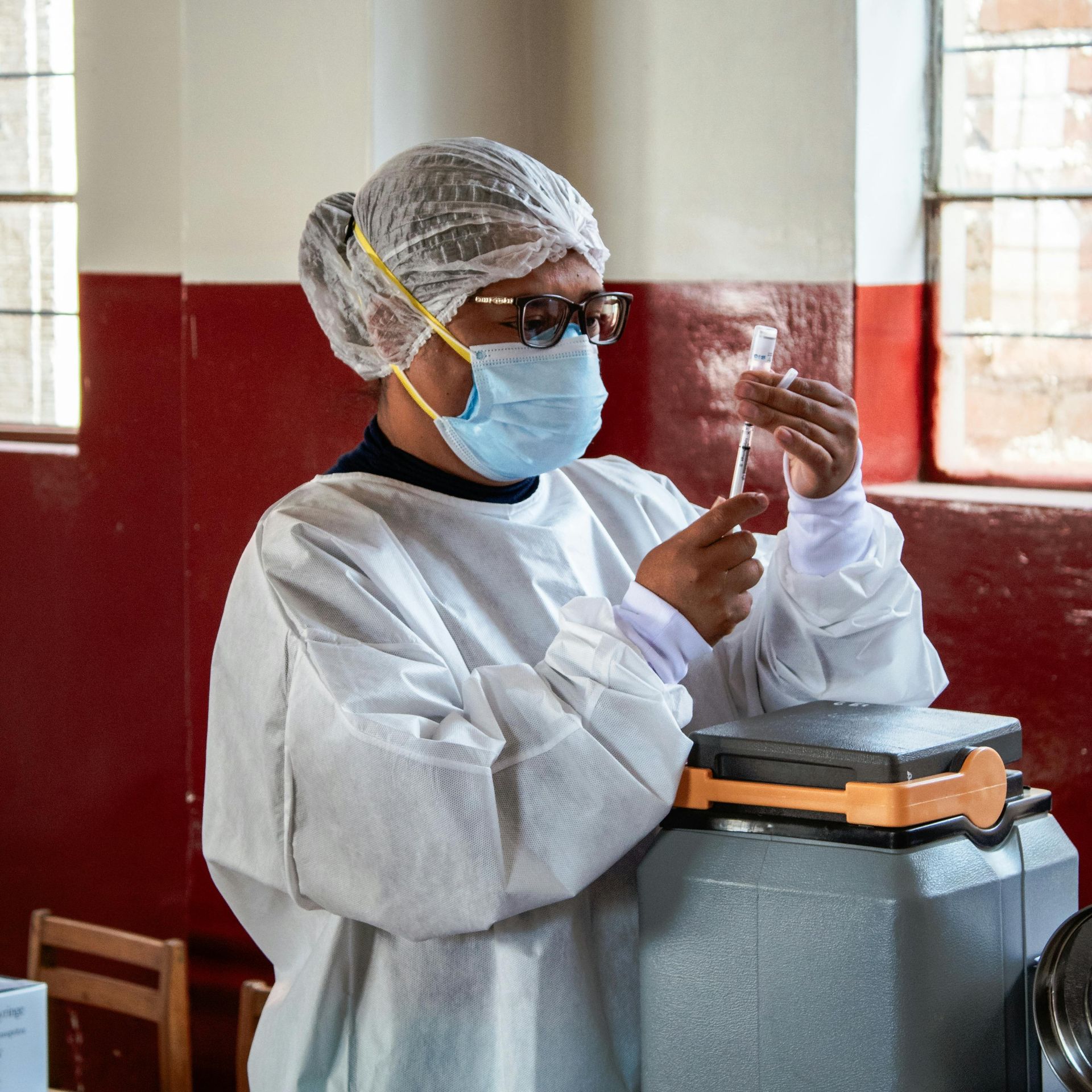
Unlike traditional chemical medicines, vaccines and biological drugs contain complex proteins that behave more like fresh food than stable pharmaceuticals. Most vaccines must be stored between +2°C and +8°C throughout their entire journey from manufacturer to patient (World Health Organization, 2021). This narrow temperature window reflects the delicate nature of the biological components that trigger our immune response.
Heat accelerates the degradation of vaccine proteins, gradually destroying their ability to protect us. Some vaccines containing aluminum adjuvants face an opposite threat: freezing permanently damages their structure, rendering them ineffective even if later returned to proper temperatures. Live attenuated vaccines, which contain weakened viruses, are particularly unstable to heat, while inactivated vaccines and those with aluminum salts are highly sensitive to freezing (Kumru et al., 2014).
The COVID-19 pandemic brought these challenges into sharp focus. While some vaccines required standard refrigeration, the Pfizer-BioNTech vaccine initially demanded storage between - 80 °C to - 60 °C, which is colder than an Antarctic winter (Pfizer, 2021). This ultra-cold requirement created unprecedented logistical hurdles, particularly for countries already struggling with basic cold chain infrastructure.
The Cold Chain Challenge
The cold chain is the temperature-controlled supply network that keeps vaccines potent from manufacturing through administration. It encompasses specialized refrigerators, freezers, insulated transport containers, temperature monitoring devices, and the trained personnel to maintain them all. Every link matters. A single temperature breach during storage or transport can compromise an entire batch.
In wealthy nations with reliable electricity and infrastructure, maintaining the cold chain is challenging but manageable. In low and middle-income countries, it becomes a monumental task. Studies reveal that only 76.7% of health facilities in some regions have functional refrigerators (Yitayew et al., 2019). Among those with equipment, many lack backup generators when power fails, which happens frequently in areas where electricity access is unreliable.
The financial burden is substantial. Transport adds another layer of complexity. Vaccines must travel from national storage facilities to regional distribution centers, then to local clinics, often over rough roads in hot climates. Each transfer point presents another opportunity for temperature deviation. Personnel training matters just as much as equipment. Research in Ethiopia found that only 48.3% of health workers knew the correct vaccine storage temperature (Yitayew et al., 2019). Even well-intentioned staff can inadvertently damage vaccines by placing ice packs too close to vials, causing accidental freezing.
When the Chain Breaks
The human cost of cold chain failures is staggering. According to the World Health Organization, up to 50% of vaccines are wasted globally every year, largely due to temperature control failures (United Nations Environment Programme, 2020). At the scale of global immunization efforts, this represents potentially a billion wasted doses.
But waste is only part of the story. Vaccines exposed to improper temperatures don't always look different: there's no visible sign they've lost potency. When administered, these compromised vaccines may provide little or no protection, leaving people vulnerable while believing they're immunized. Studies have linked improper vaccine storage to outbreaks of vaccine-preventable diseases in several developing countries (Yitayew et al., 2019).
In 2011, half of the countries eligible for support from the Global Alliance for Vaccines and Immunization (GAVI) reported vaccine wastage rates exceeding WHO recommendations, and 2.8 million vaccine doses were lost in just five countries due to cold chain failures (Ali et al., 2021). These aren't just statistics: they represent children who contracted preventable diseases, families facing medical expenses, and strained healthcare systems dealing with outbreaks that shouldn't have happened.
Climate change is making matters worse. In regions where average daily temperatures already exceed 30°C, maintaining cold chains becomes increasingly difficult. Power outages during heat waves, when refrigeration is most critical, create perfect conditions for widespread vaccine loss.
Innovation on the Horizon
The scientific community is pursuing multiple strategies to break free from cold chain dependency. The most promising approach involves thermostable vaccine formulations - vaccines designed to withstand higher temperatures without losing effectiveness.
Researchers are developing dry powder vaccines using techniques like spray-drying and lyophilization (freeze-drying). By removing water content, these formulations dramatically improve stability. One study demonstrated that spray-dried HPV vaccine powder remained immunogenic after storage at 37°C for over a year (Garg et al., 2016). Another showed that influenza vaccine powder maintained full potency for three years at room temperature (Kanojia et al., 2017).
The advantages of dry powder formulations extend beyond temperature stability. These products eliminate reconstitution requirements in some applications, reduce transportation weight and volume, and in certain formulations, can be administered through alternative routes like inhalation.
The WHO has introduced the concept of controlled temperature chain (CTC), which allows vaccines to be temporarily stored outside the standard cold chain under specific monitored conditions. Modeling studies in Niger showed that making vaccines thermostable would have a net positive effect on supply chains by increasing vaccine availability and reducing bottlenecks (Lee & Cakouros, 2017).
Advanced formulation technologies are also emerging. Scientists are exploring nanoparticle-based delivery systems and protective coating techniques to create shells around vaccine particles. These innovations solve temperature problems and often improve immune responses and patient compliance through non-invasive delivery methods.
The Path Forward
The cold chain isn't going away overnight, nor should it. For many vaccines, refrigeration remains the most practical solution. However, the global immunization landscape is changing. As new thermostable technologies mature, we're moving toward a future where vaccine effectiveness doesn't depend entirely on an unbroken refrigeration chain.
Developing countries stand to benefit most from these innovations. Thermostable vaccines could reach remote communities that the current cold chain infrastructure cannot reliably serve. They could dramatically reduce waste, lower distribution costs, and ensure that vaccines arriving at clinics actually work when administered. The potential impact is enormous: improved thermostability could help prevent approximately three million child deaths annually in developing regions by improving vaccine availability (Akalu et al., 2025).
The challenge now is translation. Many promising thermostable formulations remain in research labs. Bringing them to market requires overcoming regulatory hurdles, establishing scalable manufacturing processes, and demonstrating long-term stability under diverse conditions. It also requires investment, not just in research, but in the infrastructure to produce and deploy these new vaccine formats.
The COVID-19 pandemic taught us that vaccine development is only half the battle. Distribution determines who actually receives protection. As we face future health challenges, from pandemic preparedness to routine immunization, solving the stability problem is a public health imperative. The question isn't whether we can develop vaccines that don't need constant refrigeration. It's whether we'll invest in making them accessible to everyone who needs them.


Discussion