
When you inhale medication from a dry powder inhaler or receive a reconstituted vaccine, you're benefiting from a manufacturing process used to make instant coffee. Spray-drying, the technique that transformed how we preserve everything from milk to espresso, has become indispensable in modern medicine. This single-step process converts liquid drug formulations into stable, storable powders in seconds. For heat-sensitive biologics like vaccines and proteins, spray-drying offers something remarkable: the ability to survive without refrigeration while maintaining their therapeutic power.
The Science Behind the Mist
Spray-drying works through controlled evaporation under precisely engineered conditions. A liquid formulation containing the drug is atomized into millions of tiny droplets inside a heated chamber. As these droplets fall through hot air, the solvent evaporates almost instantaneously, leaving behind solid microparticles that are collected at the chamber's base (Vehring, 2008).
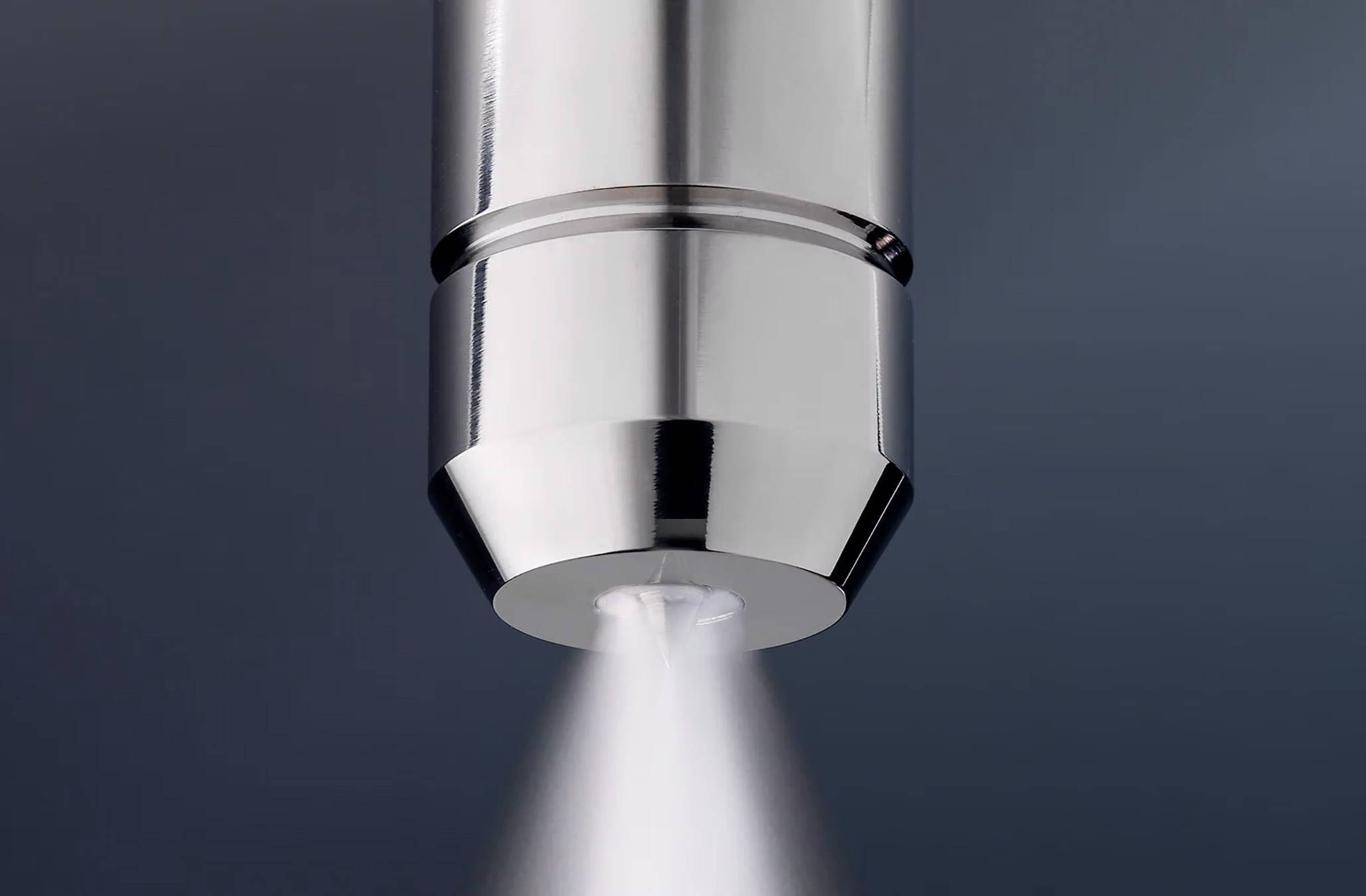
The process seems simple, but the physics are sophisticated. The inlet temperature can reach more than 200 °C, yet the particles themselves experience much lower temperatures due to evaporative cooling (Ziaee et al., 2019). This temperature differential is critical. While the surrounding air is hot enough to drive rapid drying, the drug molecules remain at safer temperatures. This protects temperature-sensitive compounds from degradation that would occur with traditional drying methods.
Particle size, shape, and surface properties can all be controlled by adjusting parameters like feed flow rate, air temperature, and nozzle design (Vehring, 2008). A formulation sprayed at different conditions produces entirely different powders—some suitable for lung delivery, others optimized for tablet compression or rapid dissolution.
Why Liquids Fail and Powders Prevail
The shift from liquid to powder formulations addresses a fundamental challenge in pharmaceutical development: stability. Biological drugs—proteins, antibodies, vaccines—are fragile molecules that degrade rapidly in aqueous solutions. Water facilitates chemical reactions that break down active ingredients. Enzymatic degradation, oxidation, and aggregation all accelerate in liquid environments (Chaurasiya & Zhao, 2021).
The cold chain exists precisely because of this instability. Vaccines and biologics require continuous refrigeration from manufacturing to administration, an infrastructure that costs billions globally and fails in regions without reliable electricity. When the COVID-19 pandemic demanded rapid vaccine distribution, the cold chain became a bottleneck. Some vaccines require storage at -70°C, limiting their reach to well-resourced healthcare systems.
Spray-dried formulations break this dependency. By removing water, the process creates a stable glass-like matrix that immobilizes drug molecules, dramatically slowing degradation (Ziaee et al., 2019). Research demonstrates that spray-dried vaccines can maintain stability at elevated temperatures where liquid formulations fail. The pharmaceutical industry has successfully spray-dried insulin, antibodies, and vaccines while preserving their biological activity (Amidi et al., 2008; Kanojia et al., 2017).
From Instant Coffee to Inhaled Insulin
The technique's pharmaceutical applications span far beyond stability. Spray-drying enables entirely new routes of drug administration. Inhaled medications for asthma and chronic obstructive pulmonary disease rely on powders with specific aerodynamic properties—particles must be 1-5 micrometers in diameter to reach deep lung regions. Spray-drying can engineer particles within this narrow size range consistently (Vehring, 2008).
Vaccine development has embraced spray-drying technology. Influenza vaccines have been formulated as inhalable powders using this technique, with studies demonstrating preserved immunogenicity after the drying process (Saluja et al., 2010). Research into spray-dried bacterial lysates for respiratory infection prevention shows how the process preserves antigenic structures while creating particles optimized for immune cell uptake (da Silva et al., 2025).
Beyond vaccines, spray-drying has revolutionized antibiotic delivery to the lungs. Dry powder formulations allow patients with cystic fibrosis to administer high local doses directly to infected airways, avoiding systemic side effects (Chaurasiya & Zhao, 2021). The powders remain stable for extended periods at room temperature, eliminating the need for refrigerated liquid formulations that expire quickly once opened.
The Delicate Balance of Heat and Survival
Despite its advantages, spray-drying presents significant technical challenges. The exposure to heat and mechanical shear forces during atomization can denature proteins or inactivate live microorganisms. Formulation scientists must carefully select protective excipients—sugars like trehalose or polymers like dextran—that stabilize molecules during the drying process (Kanojia et al., 2017).
The choice of these stabilizers follows established principles. They work by replacing water molecules around the drug, maintaining the protein's native structure even in the dry state (Matthews et al., 2020). Some excipients also prevent particle aggregation during storage, ensuring that powders remain free-flowing and easily redispersible. Getting this formulation balance right requires extensive optimization. Too little stabilizer and the drug degrades; too much and particles become too large or dense for effective delivery.
Manufacturing scale-up adds another layer of complexity. Laboratory spray-dryers process milliliters per minute; industrial systems handle hundreds of liters per hour (Ziaee et al., 2019). Maintaining consistent particle properties across this scale difference demands precise process control. Temperature fluctuations of just a few degrees can alter particle morphology, affecting everything from aerosol performance to dissolution rates.
What This Means for Global Health
The implications extend beyond pharmaceutical elegance. Spray-dried formulations could democratize access to life-saving medicines. In regions where cold chain infrastructure is unreliable or nonexistent, thermostable vaccines and biologics mean fewer spoiled doses and broader immunization coverage. Temperature-sensitive health products remain vulnerable throughout the supply chain, from manufacturing facilities to point-of-care delivery—a challenge spray-drying directly addresses (WHO, 2015).
For patients, powder formulations often mean simpler administration. Dry powder inhalers don't require the hand-breath coordination needed for pressurized inhalers (Chaurasiya & Zhao, 2021). Reconstituted vaccines from stable powders eliminate the narrow window between thawing and expiration that complicates liquid vaccine logistics. Some powder formulations even enable single-dose packaging, reducing contamination risks from multi-dose vials.
The technology also enables pandemic preparedness. Spray-dried vaccine stockpiles can be maintained without continuous refrigeration, ready for rapid deployment when outbreaks occur (Kanojia et al., 2017). This approach simplifies vaccine distribution in resource-limited settings where maintaining cold chain integrity presents logistical and financial barriers.
The Next Chapter in Pharmaceutical Manufacturing
Spray-drying has evolved from a food preservation technique into a cornerstone of pharmaceutical innovation. Its ability to transform unstable liquids into robust, deliverable powders has enabled new therapeutic approaches—from inhaled vaccines to thermostable biologics (Vehring, 2008; Kanojia et al., 2017). As drug development increasingly focuses on complex molecules like antibodies, RNA therapeutics, and live cell products, the demand for stabilization technologies will only intensify.
The technique isn't perfect. Not every drug survives the process, and optimization remains labor-intensive (Ziaee et al., 2019). But for the molecules it can handle, spray-drying offers something invaluable: the stability to reach patients who need them, regardless of infrastructure limitations. In a world where equitable access to medicine remains elusive, that transformation from liquid to powder might be revolutionary indeed.




Discussion