
Introduction
Irregular menstrual cycles, persistent acne, and unexplained weight gain are often brushed off as routine health concerns. However, for many women, these symptoms may signal an underlying condition known as Polycystic Ovary Syndrome (PCOS).
PCOS is one of the most common hormonal disorders affecting women of reproductive age, yet it remains underdiagnosed and frequently misunderstood. Beyond its impact on fertility, PCOS can influence metabolic health, increase the risk of chronic diseases, and affect overall well-being.
Understanding how PCOS develops, how it presents, and how it is diagnosed is essential. And it is not only for early detection, but also for long-term health management.
What Is Polycystic Ovary Syndrome (PCOS)?
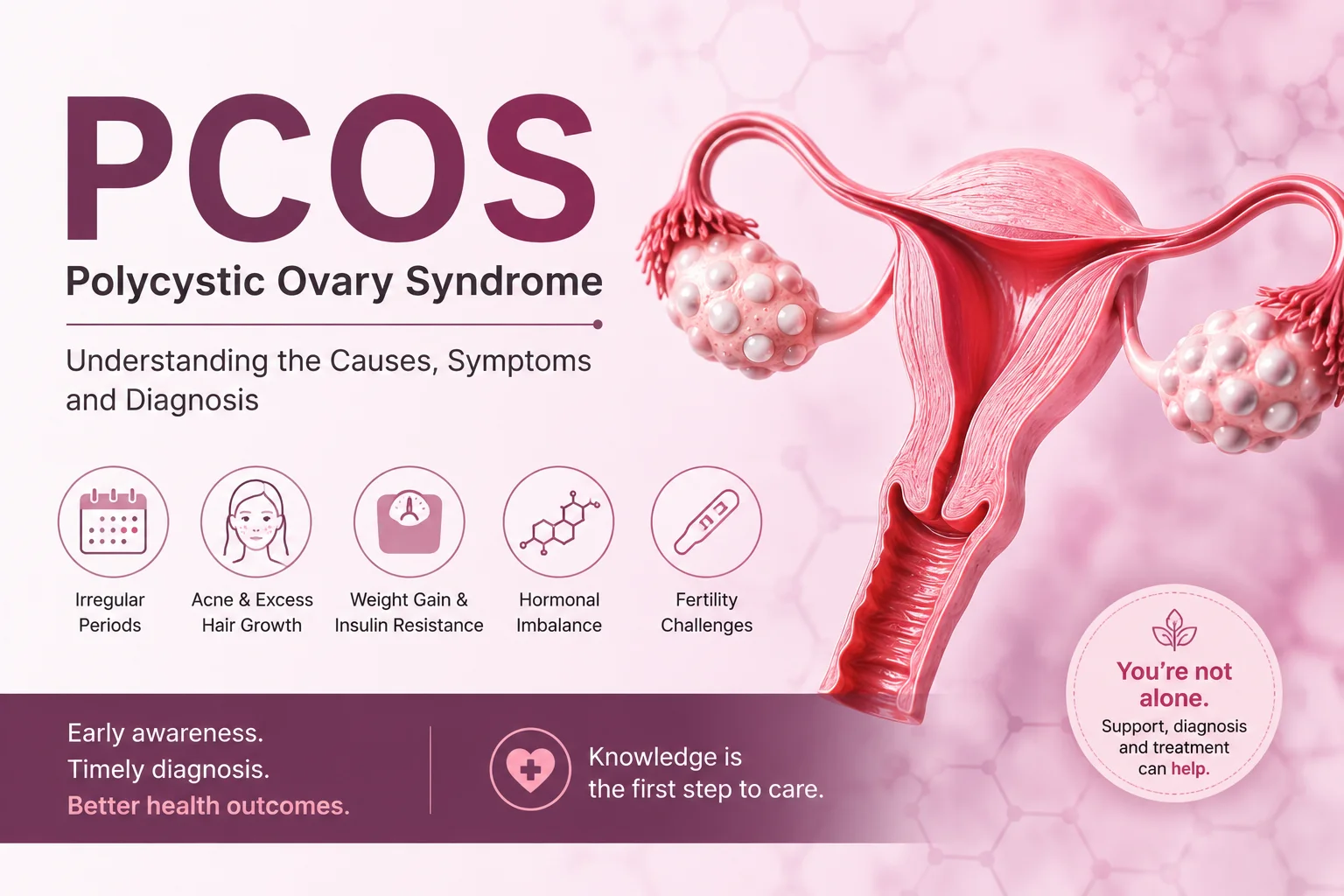
Polycystic Ovary Syndrome (PCOS) is a complex endocrine disorder characterized by an imbalance in reproductive hormones. This imbalance disrupts the normal function of the ovaries, particularly ovulation (the process by which an ovary releases an egg during the menstrual cycle).
Although the term “polycystic” suggests the presence of cysts, not all individuals with PCOS develop ovarian cysts. Instead, the condition is typically identified using three major clinical features:
Irregular or absent ovulation
Elevated levels of androgens (male hormones)
Enlarged ovaries with multiple small follicles visible on ultrasound
PCOS is considered a multifactorial disorder, meaning it arises from a combination of genetic predisposition and environmental influences such as lifestyle and metabolic health.
What Causes PCOS?
The exact cause of PCOS is not fully understood, but research has identified several key factors that contribute to its development.
Hormonal Imbalance
One of the defining features of PCOS is elevated androgen levels. While women naturally produce small amounts of these hormones, excess levels can interfere with ovulation. This disruption often leads to irregular menstrual cycles and symptoms such as acne and excessive hair growth.
Insulin Resistance
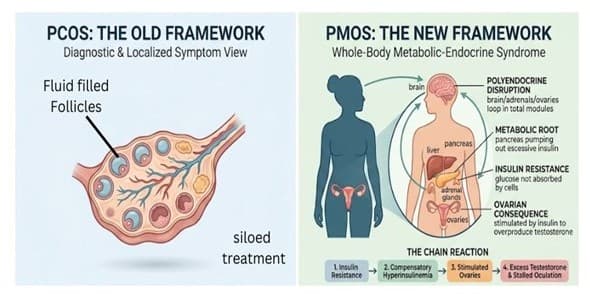
A significant number of individuals with PCOS experience insulin resistance, a condition where the body’s cells do not respond effectively to insulin. As a result, the body produces more insulin to compensate. Elevated insulin levels can stimulate the ovaries to produce more androgens, worsening hormonal imbalance.
Genetic Factors
PCOS often runs in families, suggesting a strong genetic component. Individuals with a family history of PCOS or related metabolic conditions may have a higher risk of developing the disorder.
Chronic Inflammation
Low-grade inflammation has been linked to PCOS. This inflammatory state may contribute to increased androgen production and can also play a role in insulin resistance and metabolic complications.
Common Symptoms of PCOS
The symptoms of PCOS can vary widely in type and severity, which is one reason the condition is frequently overlooked or misdiagnosed.
Some of the most common symptoms include:
Irregular, infrequent, or prolonged menstrual periods
Excess facial or body hair (a condition known as hirsutism)
Persistent acne or oily skin
Weight gain or difficulty losing weight
Thinning hair or hair loss on the scalp
Darkened skin patches, particularly around the neck or underarms
Difficulty conceiving due to irregular ovulation
It is important to note that not all individuals will experience every symptom, and some may have mild symptoms that go unnoticed for years.
How Is PCOS Diagnosed?
Diagnosing PCOS requires a comprehensive approach because no single test can definitively confirm the condition. Healthcare providers rely on a combination of clinical evaluation, laboratory testing, and imaging.
The most widely used diagnostic criteria are the Rotterdam criteria, which require the presence of at least two of the following:
Irregular or absent ovulation
Clinical or biochemical signs of elevated androgens
Polycystic ovaries observed on ultrasound
Laboratory Tests
Blood tests are essential in evaluating hormone levels and ruling out other conditions. These tests may include:
Testosterone and other androgen levels
Luteinizing hormone (LH) and follicle-stimulating hormone (FSH)
Blood glucose levels to assess insulin resistance
Lipid profile to evaluate cardiovascular risk
Imaging Studies
Pelvic ultrasound is commonly used to examine the ovaries. In PCOS, the ovaries may appear enlarged and contain multiple small follicles arranged around the outer edge.
Exclusion of Other Conditions
Before confirming a diagnosis, healthcare providers must rule out other disorders that can mimic PCOS symptoms, such as thyroid dysfunction, hyperprolactinemia, or adrenal disorders.
Why PCOS Matters: Beyond Reproductive Health
PCOS is often associated with fertility challenges, but its impact extends far beyond reproductive health. If left unmanaged, the condition can lead to several long-term health complications.
These include:
Type 2 diabetes due to insulin resistance
Cardiovascular disease linked to metabolic abnormalities
Endometrial cancer resulting from prolonged irregular menstrual cycles
Metabolic syndrome, which increases the risk of heart disease and stroke
Additionally, PCOS can affect mental health, contributing to anxiety, depression, and reduced quality of life.
Early diagnosis and intervention are critical. With proper management, including lifestyle modifications, medical treatment, and regular monitoring, many of these risks can be reduced.
Conclusion
Polycystic Ovary Syndrome (PCOS) is a complex but manageable condition that affects millions of women worldwide. While its symptoms can be diverse and sometimes subtle, understanding the underlying causes and recognizing early warning signs can make a significant difference in outcomes.
Accurate diagnosis, supported by clinical evaluation and laboratory testing, allows for timely intervention and better long-term health management. As awareness of PCOS continues to grow, more individuals can access the care and support they need to lead healthier lives.



Discussion