
Introduction
The thyroid may be small, but its influence on the human body is enormous. This butterfly-shaped gland, located at the front of the neck, produces hormones that regulate metabolism, energy production, body temperature, heart rate, growth, and many other essential functions.
When the thyroid produces too much or too little hormone, the effects can be widespread. Fatigue, unexplained weight changes, mood disturbances, hair loss, irregular heartbeat, and sensitivity to temperature are just a few of the symptoms that may signal a thyroid disorder. However, these symptoms are often subtle and can easily be mistaken for other health conditions.
This is why Thyroid Function Tests (TFTs) are among the most commonly requested laboratory investigations. These blood tests provide valuable insights into how well the thyroid gland is functioning and help healthcare professionals diagnose, monitor, and manage thyroid disorders before serious complications develop.
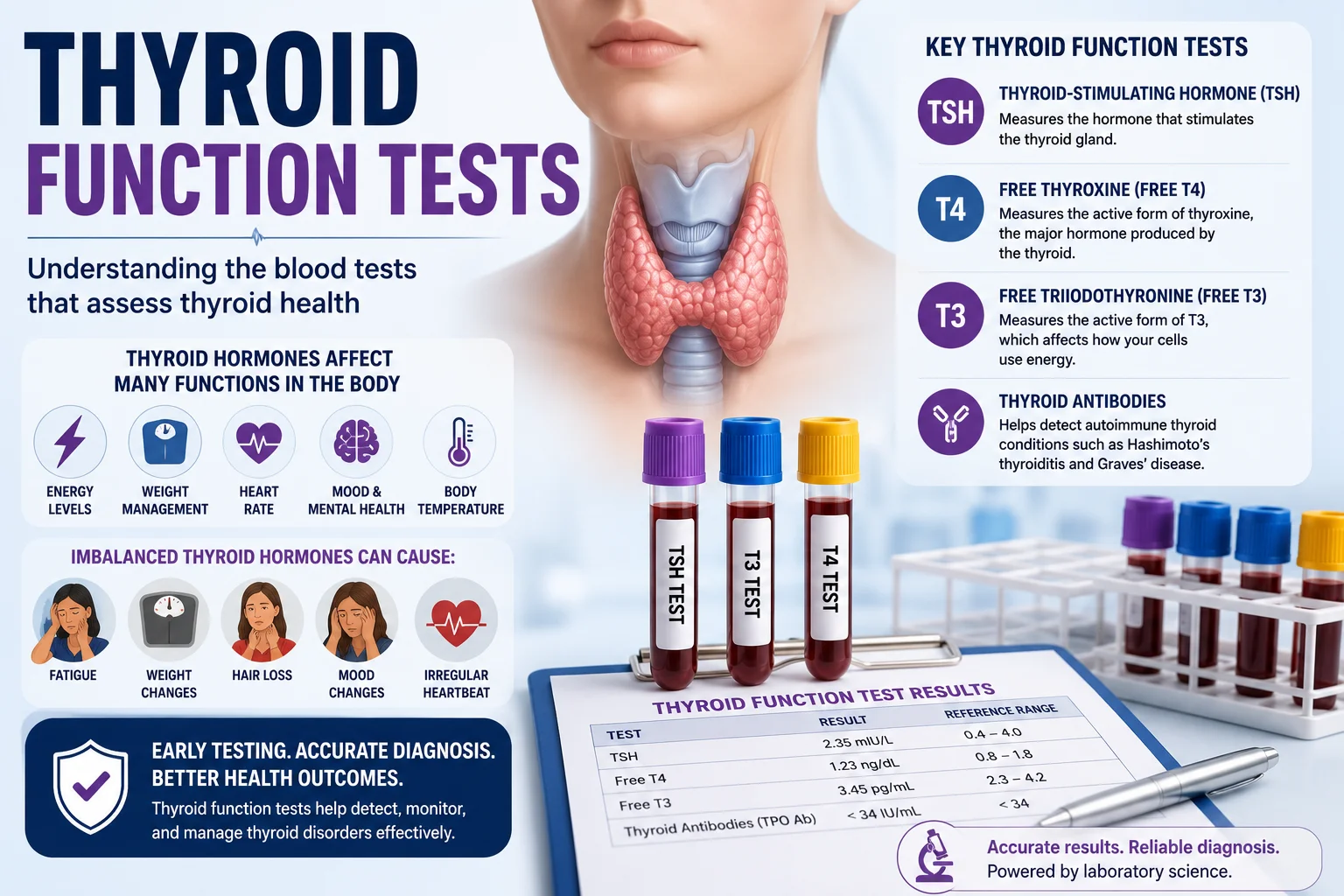
What Are Thyroid Function Tests?
Thyroid Function Tests (TFTs) are a group of laboratory blood tests used to evaluate the function of the thyroid gland by measuring thyroid hormones and the hormones that regulate their production.
Rather than relying on a single result, healthcare providers typically interpret several laboratory values together to gain a comprehensive understanding of thyroid function.
Thyroid function tests are commonly ordered when a person experiences symptoms suggestive of thyroid disease, during routine monitoring of known thyroid disorders, or when assessing the effectiveness of treatment.
They are also frequently requested for individuals with autoimmune diseases, a family history of thyroid disorders, or during pregnancy when thyroid function requires close monitoring.
Why Are Thyroid Function Tests Important?
The thyroid influences nearly every organ system in the body. Even mild abnormalities in thyroid hormone production can affect physical health, mental wellbeing, and overall quality of life.
Thyroid function tests help healthcare professionals:
Detect thyroid disorders early
Determine whether the thyroid is overactive or underactive
Investigate unexplained symptoms
Monitor treatment response
Guide medication adjustments
Evaluate thyroid disorders during pregnancy
Because many thyroid conditions develop gradually, laboratory testing often provides the earliest indication that something is wrong.
The Main Tests Included in a Thyroid Function Panel
Several blood tests work together to assess thyroid health.
Thyroid-Stimulating Hormone (TSH)
The Thyroid-Stimulating Hormone (TSH) test is usually the first and most sensitive test used to evaluate thyroid function. TSH is produced by the pituitary gland and signals the thyroid to produce thyroid hormones.
When thyroid hormone levels fall, the pituitary releases more TSH to stimulate hormone production. Conversely, when thyroid hormone levels are too high, TSH production decreases.
Because of this relationship, abnormal TSH levels often provide the earliest evidence of thyroid dysfunction.
Free Thyroxine (Free T4)
Thyroxine (T4) is the primary hormone produced by the thyroid gland. Most T4 circulates being bound to proteins, but the Free T4 test measures the hormone that is biologically active and available for use by body tissues.
Measuring Free T4 alongside TSH helps healthcare providers determine whether thyroid hormone production is normal, reduced, or excessive.
Free Triiodothyronine (Free T3)
Triiodothyronine (T3) is the more active thyroid hormone responsible for many metabolic effects throughout the body.
Although much of the body's T3 is produced by converting T4 into T3, measuring Free T3 can be particularly useful when hyperthyroidism is suspected.
Additional Thyroid Tests
Depending on the clinical situation, additional laboratory tests may be requested.
Thyroid Antibody Tests
Autoimmune disorders are among the most common causes of thyroid disease. Testing for thyroid antibodies can help diagnose conditions such as:
These tests identify antibodies that mistakenly attack thyroid tissue or interfere with hormone production.
Calcitonin
Although not routinely included in standard thyroid function panels, calcitonin testing may be performed when evaluating certain types of thyroid cancer.
Common Thyroid Disorders Detected Through Laboratory Testing
Hypothyroidism
Hypothyroidism occurs when the thyroid gland produces insufficient thyroid hormones.
Common symptoms include:
Persistent fatigue
Weight gain
Feeling unusually cold
Dry skin
Hair thinning
Constipation
Depression
Slow heart rate
Laboratory findings often show elevated TSH with reduced Free T4.
Hyperthyroidism
Hyperthyroidism develops when excessive thyroid hormone is produced.
Symptoms may include:
Unexplained weight loss
Rapid heartbeat
Heat intolerance
Anxiety
Tremors
Increased sweating
Difficulty sleeping
Laboratory testing typically demonstrates suppressed TSH with elevated Free T4 or Free T3 levels.
Factors That Can Affect Thyroid Function Test Results
Several factors may influence thyroid laboratory results, and these usually include:
Pregnancy
Certain medications
Severe illness
Recent surgery
Age
Iodine intake
Biotin supplements
Because these factors may alter laboratory values, healthcare providers always interpret thyroid function tests within the broader clinical context rather than relying on a single result.
The Role of Medical Laboratories in Thyroid Testing
Accurate diagnosis depends on reliable laboratory analysis.
Medical laboratory professionals ensure thyroid testing meets strict quality standards through proper specimen handling, instrument calibration, internal quality control, and standardized analytical procedures.
Modern laboratory analyzers can measure thyroid hormones with remarkable precision, allowing clinicians to detect even subtle abnormalities before symptoms become severe.
Laboratory medicine therefore plays a central role in diagnosing thyroid disease, monitoring treatment, and improving patient outcomes.
When Should You Consider Thyroid Testing?
Healthcare providers may recommend thyroid function testing if you experience:
Unexplained fatigue
Sudden weight changes
Persistent depression or anxiety
Hair loss
Menstrual irregularities
Infertility
Neck swelling
Family history of thyroid disease
Abnormal cholesterol levels
Pregnancy or plans to conceive
Routine thyroid screening may also be appropriate for individuals at increased risk of thyroid disorders.
Conclusion
Thyroid Function Tests (TFTs) provide essential information about one of the body's most important hormone-producing glands. By measuring hormones such as TSH, Free T4, and Free T3, these laboratory investigations help detect thyroid disorders early, guide treatment decisions, and monitor long-term disease management.
Because thyroid disorders often present with symptoms that overlap with many other conditions, laboratory testing remains the most reliable way to evaluate thyroid health. Combined with a thorough clinical assessment, thyroid function tests enable healthcare professionals to make accurate diagnoses and provide timely, effective care.
Understanding these tests empowers individuals to recognize the importance of thyroid health and the vital role laboratory medicine plays in maintaining overall wellbeing.



Discussion