
Introduction
The liver is one of the hardest-working organs in the human body. It filters toxins from the blood, produces proteins essential for blood clotting, stores nutrients, metabolizes medications, and plays a central role in digestion.
Despite these vital functions, liver disease often develops silently, with many people experiencing few or no symptoms until significant damage has occurred.
This is where Liver Function Tests (LFTs) become invaluable. These laboratory blood tests provide important information about liver health, helping healthcare professionals detect liver injury, monitor chronic liver disease, and evaluate how well the liver is performing its many essential functions.
Although commonly referred to as "liver function tests," not every test in an LFT panel directly measures liver function. Some assess liver cell injury, while others evaluate the liver's ability to produce proteins or eliminate waste products.
Understanding what each test measures helps patients better appreciate why these investigations are routinely requested in clinical practice.
What Are Liver Function Tests?
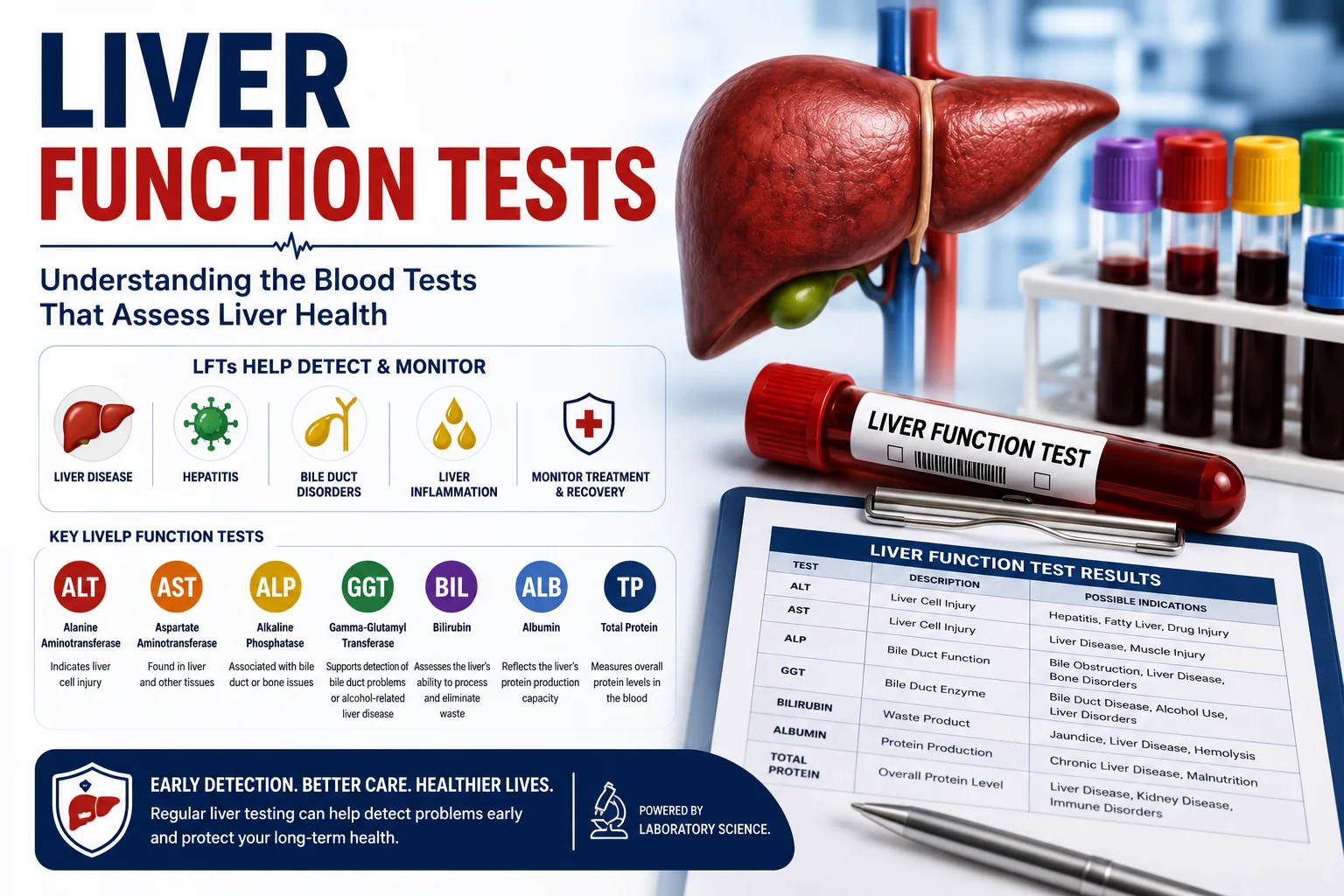
Liver Function Tests (LFTs) are a group of blood tests used to evaluate the health of the liver and detect liver inflammation, injury, or disease.
Rather than relying on a single laboratory value, healthcare professionals interpret several biomarkers together to obtain a clearer picture of liver health. This combined approach improves diagnostic accuracy and helps determine whether abnormalities are due to liver disease or another underlying condition.
LFTs are commonly requested during routine health screenings, when symptoms suggest liver disease, before certain medications are prescribed, and to monitor known liver conditions over time.
Why Are Liver Function Tests Important?
The liver performs more than 500 known functions, making it essential for life. Damage to this organ can affect metabolism, digestion, immunity, blood clotting, and detoxification.
Liver function tests help healthcare professionals:
Detect liver disease before symptoms appear
Evaluate liver inflammation or injury
Monitor chronic liver conditions
Assess the effects of medications that may affect the liver
Investigate symptoms such as jaundice, fatigue, or abdominal pain
Monitor recovery following treatment
Because many liver diseases are treatable when detected early, laboratory testing plays a critical role in preventing long-term complications.
The Main Tests Included in a Liver Function Panel
Alanine Aminotransferase (ALT)
ALT is an enzyme found primarily inside liver cells. When liver cells become damaged or inflamed, ALT leaks into the bloodstream, causing blood levels to rise.
Elevated ALT is often associated with:
Viral hepatitis
Fatty liver disease
Alcohol-related liver injury
Medication-induced liver damage
Although ALT is considered one of the most liver-specific enzymes, abnormal results require interpretation alongside other laboratory findings.
Aspartate Aminotransferase (AST)
AST is another enzyme released when cells are damaged. Unlike ALT, AST is also found in the heart, muscles, kidneys, and brain. For this reason, elevated AST does not always indicate liver disease.
Comparing AST with ALT often provides additional diagnostic information and may help identify the underlying cause of liver injury.
Alkaline Phosphatase (ALP)
ALP is an enzyme present in the liver, bile ducts, and bones. High levels of ALP may suggest:
Blocked bile ducts
Liver disease
Bone disorders
Pregnancy-related physiological changes
Additional laboratory tests are often needed to determine the source of elevated ALP.
Bilirubin
Bilirubin is produced when red blood cells are broken down. The liver then processes bilirubin so it can be removed from the body through bile.
Elevated bilirubin levels may cause jaundice, a yellow discoloration of the skin and eyes, and can indicate liver disease, bile duct obstruction, or excessive breakdown of red blood cells.
Albumin
Albumin is the most abundant protein produced by the liver. It helps to maintain fluid balance within blood vessels and transports hormones, vitamins, and medications throughout the body.
Low albumin levels may suggest chronic liver disease, kidney disease, malnutrition, or inflammatory conditions.
Total Protein
The total protein test measures the combined concentration of albumin and globulins in the blood.
Abnormal results may indicate liver disease, immune disorders, kidney disease, or nutritional deficiencies.
Gamma-Glutamyl Transferase (GGT)
GGT is an enzyme involved in bile transport. It is particularly useful for evaluating bile duct disorders and confirming whether elevated ALP originates from the liver rather than bone tissue.
GGT levels may also increase with excessive alcohol consumption or certain medications.
Conditions That Liver Function Tests Can Help Detect
LFTs support the diagnosis and monitoring of numerous conditions, including:
Fatty liver disease
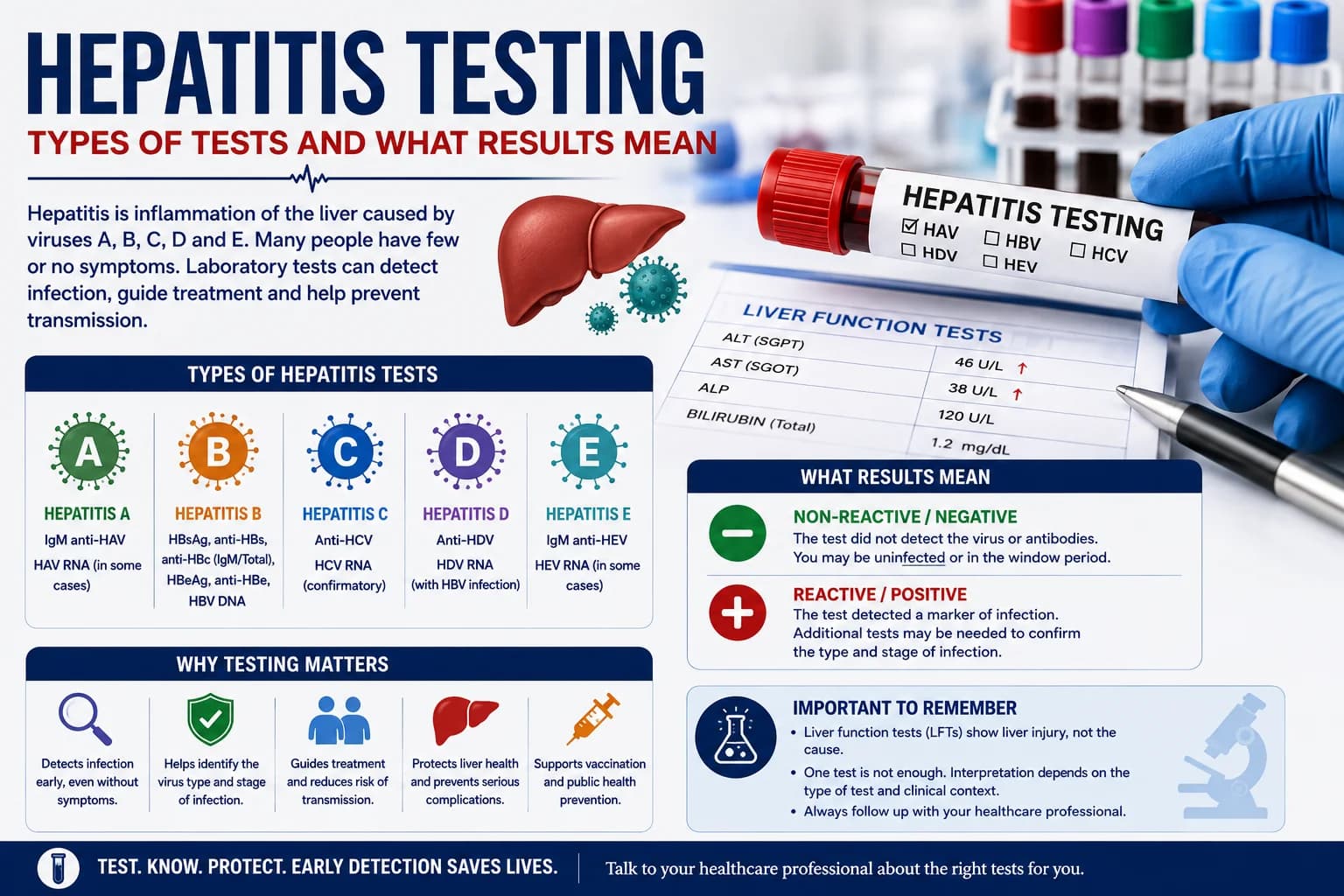
Viral hepatitis
Alcohol-related liver disease
Liver cirrhosis
Drug-induced liver injury
Autoimmune liver disease
Gallstones affecting the bile ducts
Liver tumors
Abnormal liver function tests do not automatically mean a person has liver disease. Additional laboratory investigations and imaging studies may be required to determine the underlying cause.
Factors That Can Affect Liver Function Test Results
Several factors may influence liver enzyme levels, including:
Alcohol consumption
Prescription medications
Herbal supplements
Obesity
Vigorous exercise
Pregnancy
Recent infections
Healthcare providers consider these factors when interpreting laboratory results.
The Role of Medical Laboratories in Liver Disease Diagnosis
Accurate laboratory testing is essential for identifying liver abnormalities.
Medical laboratory professionals follow strict quality assurance procedures to ensure blood samples are collected, processed, analyzed, and reported accurately.
Modern laboratory analyzers can detect even subtle changes in liver biomarkers, enabling earlier diagnosis and more effective monitoring of liver disease.
Laboratory medicine remains one of the most valuable tools for protecting liver health and guiding clinical decision-making.
When Should You Consider Liver Function Testing?
A healthcare provider may recommend liver function tests if you:
Experience persistent fatigue
Develop jaundice
Have abdominal pain or swelling
Consume alcohol heavily
Have obesity or diabetes
Take medications that affect the liver
Have a family history of liver disease
Are being monitored for chronic liver conditions
Routine testing may also be appropriate before surgery or as part of a comprehensive health assessment.
Conclusion
Liver Function Tests provide essential insights into the health of one of the body's most important organs. By measuring enzymes, proteins, and waste products such as ALT, AST, ALP, bilirubin, albumin, and GGT, these laboratory investigations help healthcare professionals detect liver disease early, monitor treatment, and evaluate liver performance.
Although abnormal results can be concerning, they are only one part of the diagnostic process and must always be interpreted alongside clinical findings and additional investigations.
Understanding the purpose of liver function tests empowers individuals to appreciate the importance of routine health screening and the critical role laboratory medicine plays in maintaining overall health.



Discussion