Science & Research
Relational Dominance: A Testable Structural Hypothesis for Navier–Stokes Turbulence
Relational Dominance: A Testable Structural Hypothesis for Navier–Stokes Turbulence
Showing results for: "dissipation" (9 results)
Relational Dominance: A Testable Structural Hypothesis for Navier–Stokes Turbulence
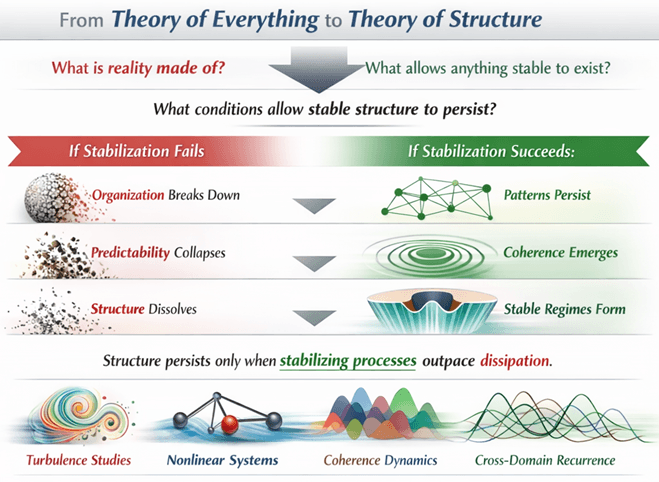
What allows anything stable to exist at all? Before objects, laws, or equations can be described, something more basic must occur: something must persist long enough to be identified. This shifts the focus from what exists to the conditions under which anything can exist stably.
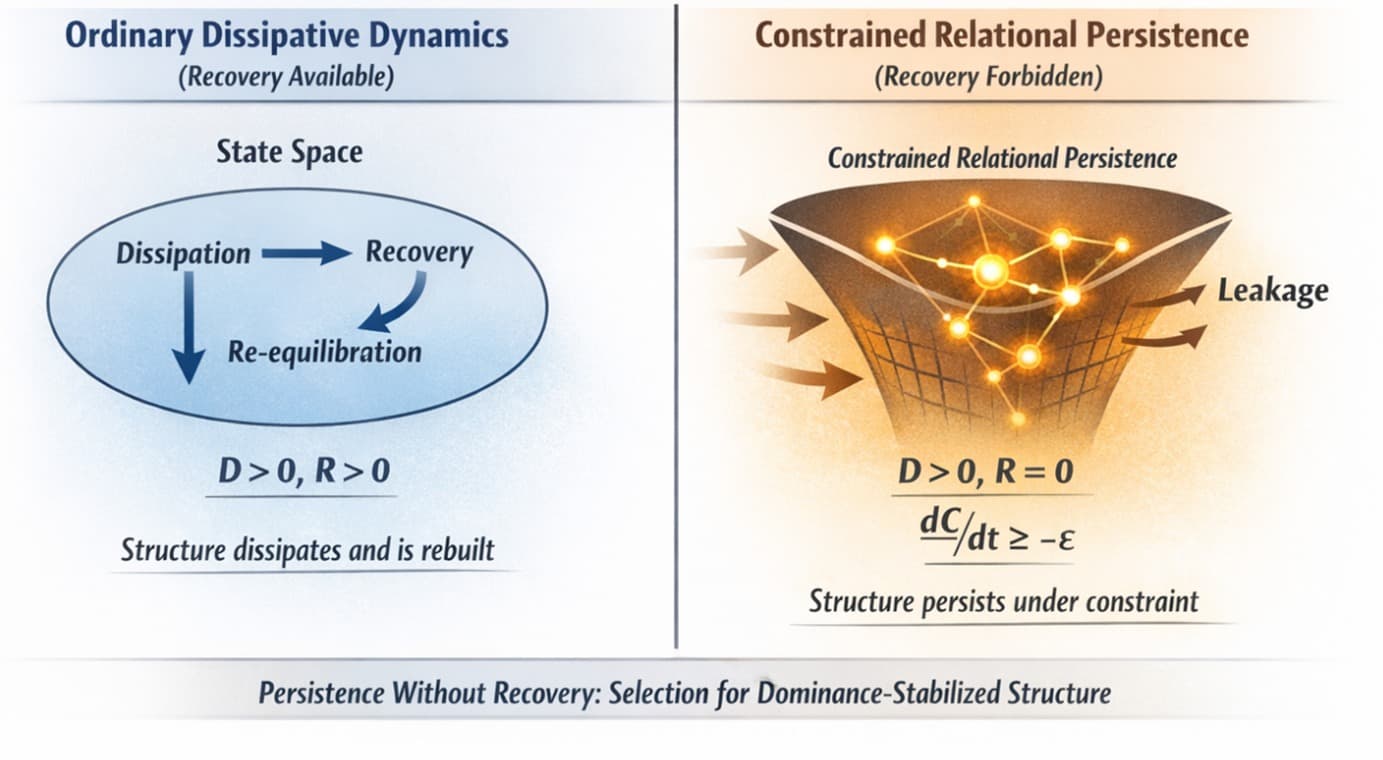
The event horizon of a black hole imposes a fundamental constraint: once matter and information cross it, ordinary recovery of structure through dissipation and re-equilibration becomes dynamically unavailable to external observers.
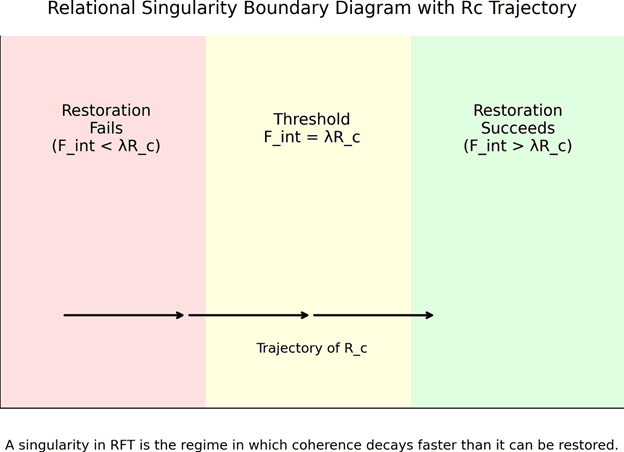
In many areas of physics, the word “singularity” implies the breakdown of equations — an undefined point where the mathematics “fails” or where physical laws suddenly stop working. But this interpretation has always felt philosophically unsatisfying. Why should nature permit a point where its own rules dissolve?
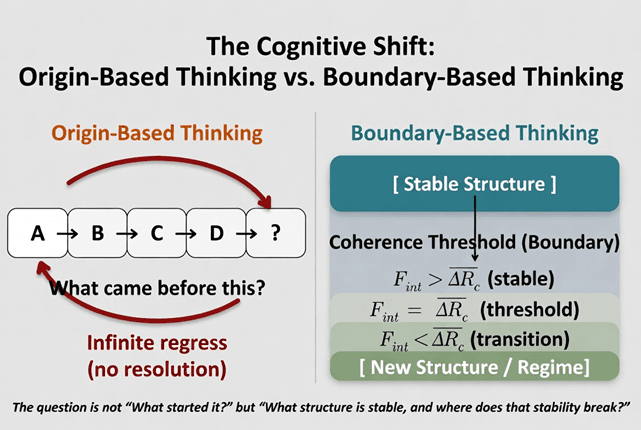
Using a simple childhood observation as the starting point, we show how shifting from origin-based to boundary-based thinking resolves infinite regress and opens a clearer way to engage with fundamental concepts in physics, time, and existence
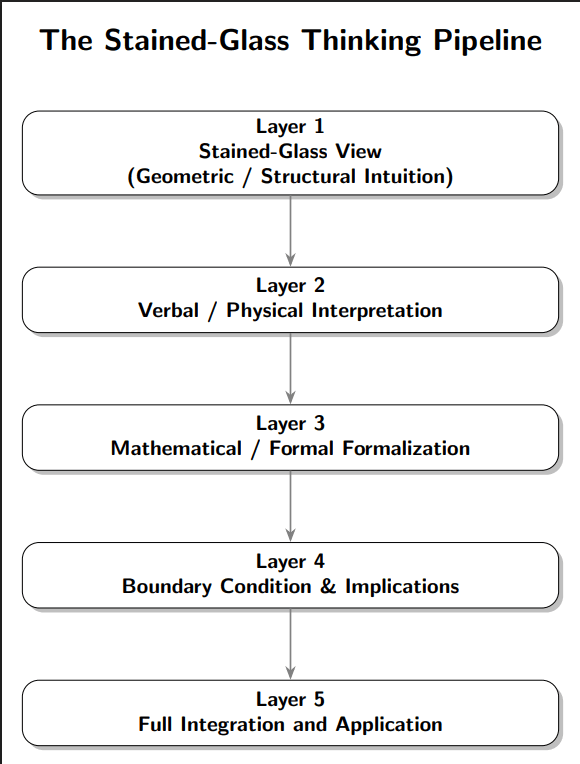
This article makes those steps explicit. I describe a repeatable cognitive pipeline I call Stained-Glass Thinking, which I have used consistently throughout the development of Relational Field Theory (RFT).
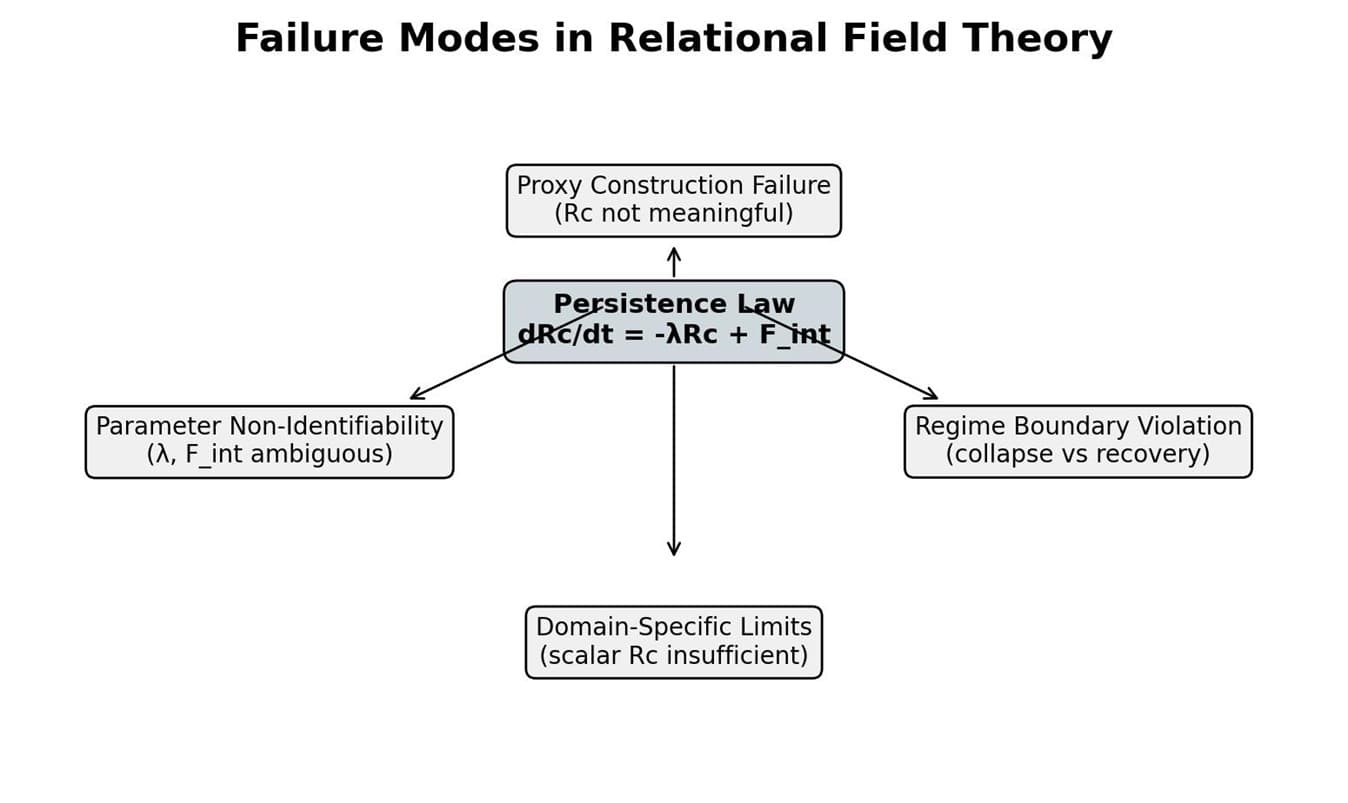
Relational Field Theory (RFT) has matured into a predictive framework with operational definitions, numerical demonstrations, and practical inference tools.
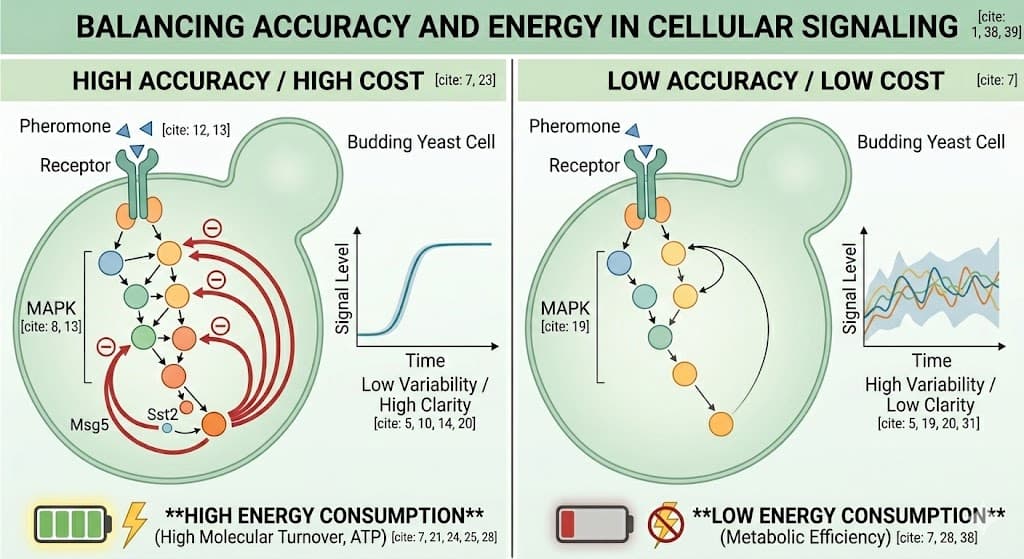
Cells constantly sense signals from their environment and convert them into internal actions through biochemical signalling pathways.
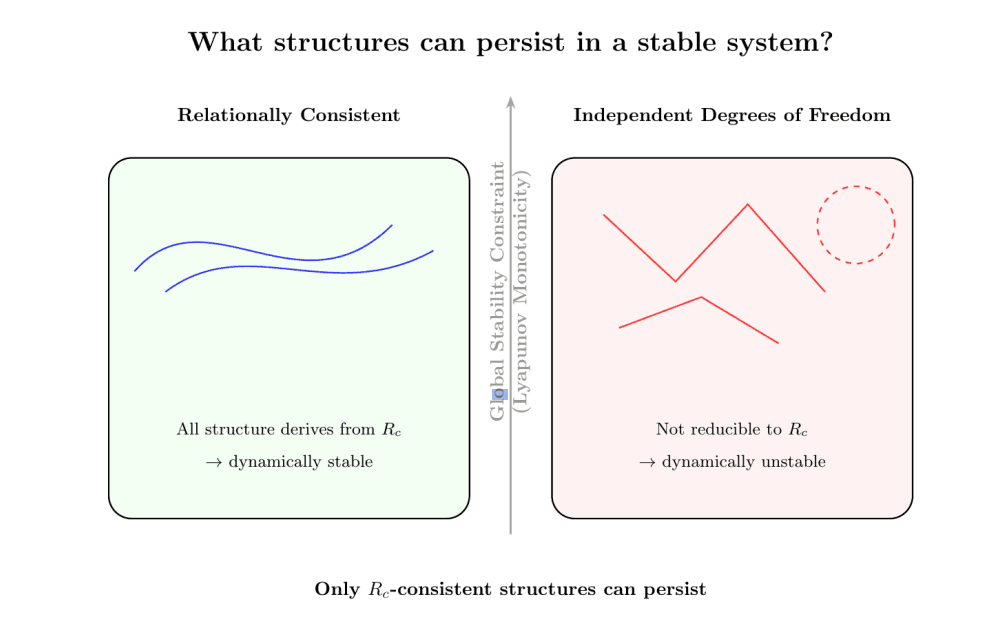
Modern physics often assumes that the complexity we observe in the universe reflects an underlying complexity in its fundamental structure. Fields, particles, forces, and geometries are typically introduced as independent components, each carrying its own degrees of freedom.
