Clinton Svancar

Clinton Svancar

Writer

Independent Researcher

Grafton Ohio USA

About

I am an independent theoretical researcher developing Relational Field Theory (RFT) — a single-field framework unifying gravity, quantum mechanics, cosmology, thermodynamics, and information through one coherent relational substrate, Rc(t,x).

Expertise

Unified field theoryRc mathematicsgravity and relativityquantum foundationscosmologythermodynamics and AI physics

Achievements

The Relational Kernel Equation (Ω = Ω[Rc])

The Relational Kernel Equation (Ω = Ω[Rc])

The unified Rc PDE for gravity, quantum behavior, and field emergence

The unified Rc PDE for gravity, quantum behavior, and field emergence

The Local Well Illusion and the collapse of time as a fundamental constant

The Local Well Illusion and the collapse of time as a fundamental constant

Relational Gravity: Completing the Gravitational Arc

Relational Gravity: Completing the Gravitational Arc

Relational Calculus, a new mathematics of coherence and emergence

Relational Calculus, a new mathematics of coherence and emergence

Work & Experience

RoleIndependent Researcher

Articles

12

Published articles

Published Articles

12 articles
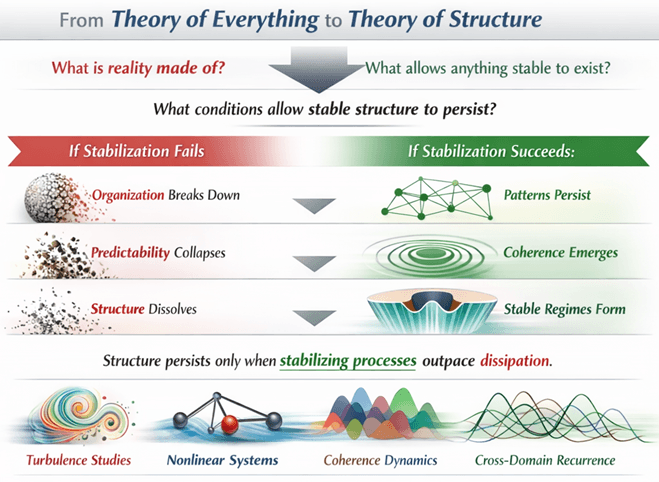
Theory of Structure: How Stable Reality Emerges from Persistent Relational Coherence

Theory of Structure: How Stable Reality Emerges from Persistent Relational Coherence

What allows anything stable to exist at all? Before objects, laws, or equations can be described, something more basic m

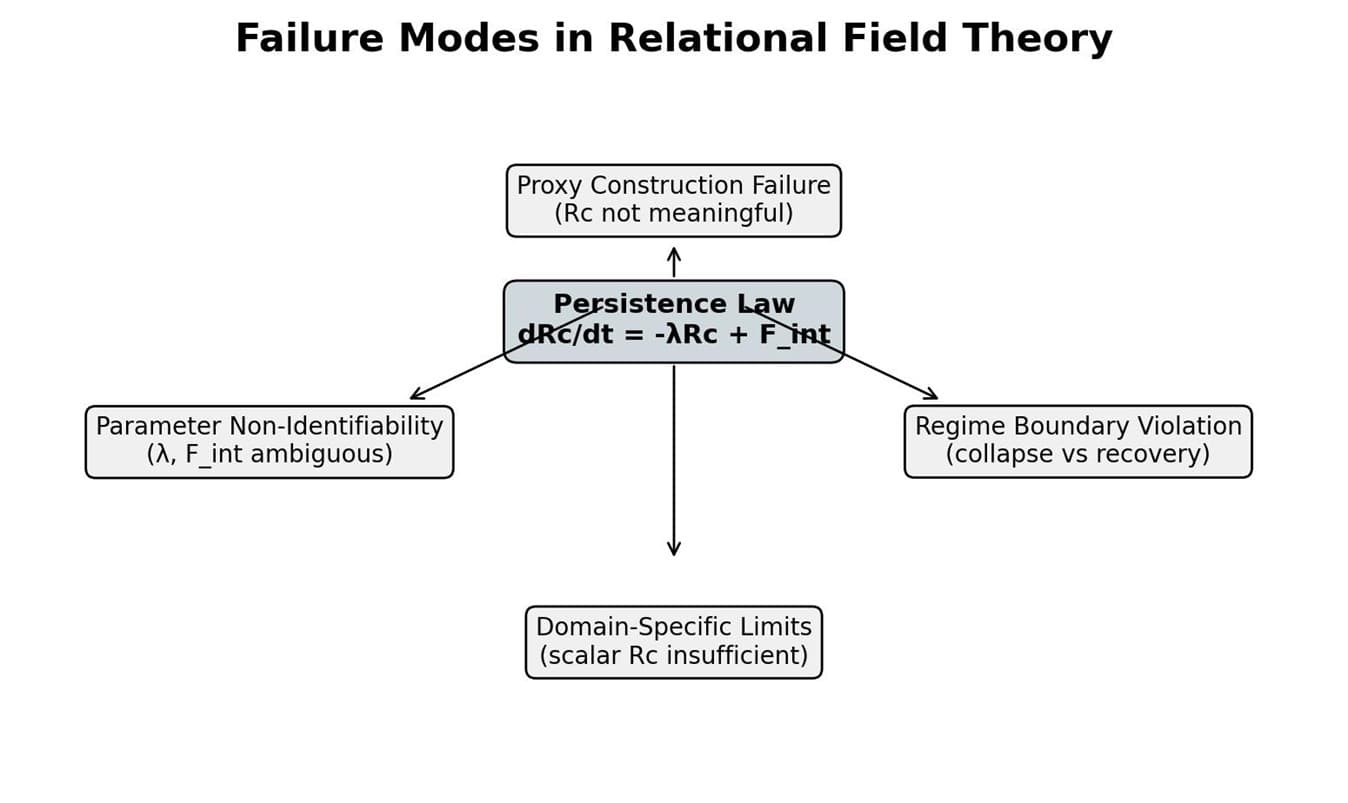
Failure Modes and Testability in Relational Field Theory

Failure Modes and Testability in Relational Field Theory

Relational Field Theory (RFT) has matured into a predictive framework with operational definitions, numerical demonstrat

Why Physical Laws Hold Locally but Become Ambiguous Across Regimes

Why Physical Laws Hold Locally but Become Ambiguous Across Regimes

Physical quantities and laws emerge from the geometry, coherence, and flow of relational fields. A central idea is relat

Persistent Relational Continuity: Building AI That Remembers You - Without Storing Everything

Persistent Relational Continuity: Building AI That Remembers You - Without Storing Everything

A low-energy dynamical approach could give companion AI the gift of long-term relational memory - especially valuable fo

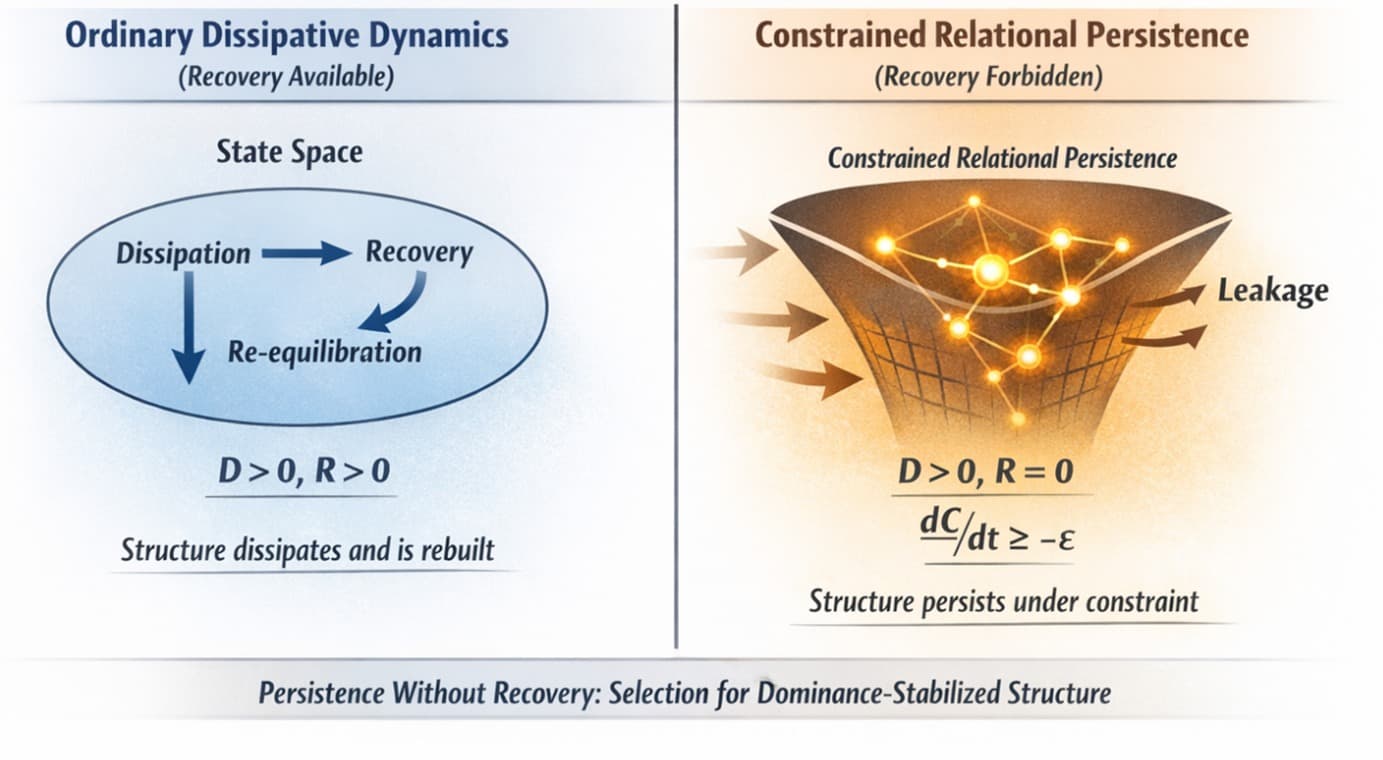
Interior Relational Persistence: A Constraint Conjecture for Black Hole Interior Dynamics

Interior Relational Persistence: A Constraint Conjecture for Black Hole Interior Dynamics

The event horizon of a black hole imposes a fundamental constraint: once matter and information cross it, ordinary recov

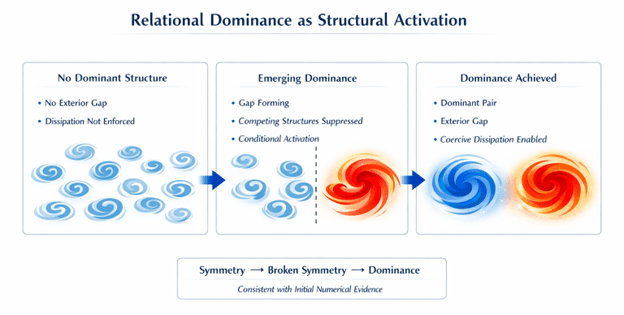
Relational Dominance: A Testable Structural Hypothesis for Navier–Stokes Turbulence

Relational Dominance: A Testable Structural Hypothesis for Navier–Stokes Turbulence

Relational Dominance: A Testable Structural Hypothesis for Navier–Stokes Turbulence

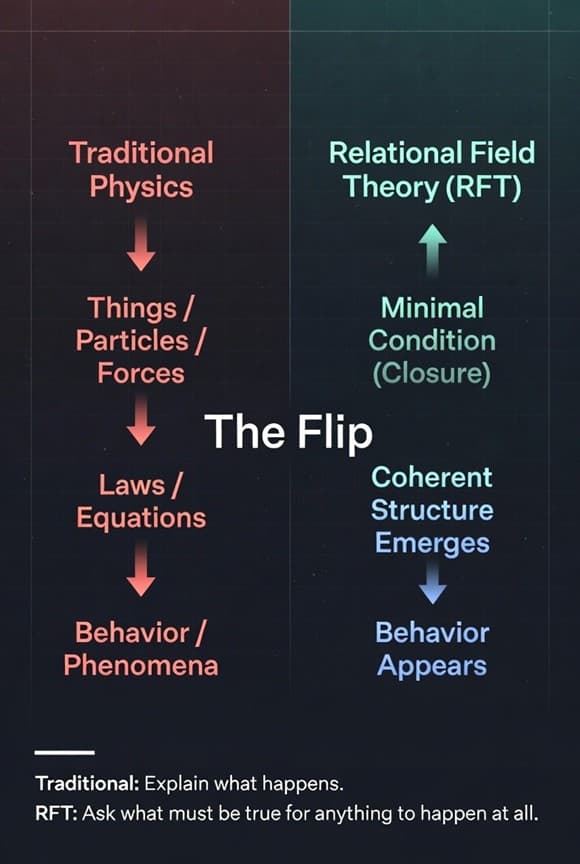
The Flip: Why Relational Field Theory Starts Where Most Physics Ends

The Flip: Why Relational Field Theory Starts Where Most Physics Ends

We begin with things - particles, fields, forces - and then build laws and equations to explain how those things behave.

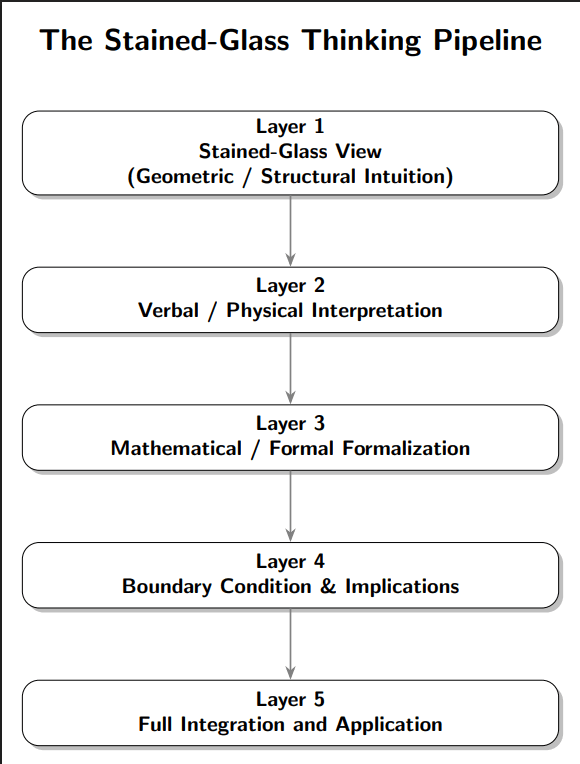
Stained-Glass Thinking: A Structured Cognitive Pipeline for Building Coherent Theories and AI Reasoning Protocols

Stained-Glass Thinking: A Structured Cognitive Pipeline for Building Coherent Theories and AI Reasoning Protocols

This article makes those steps explicit. I describe a repeatable cognitive pipeline I call Stained-Glass Thinking, which

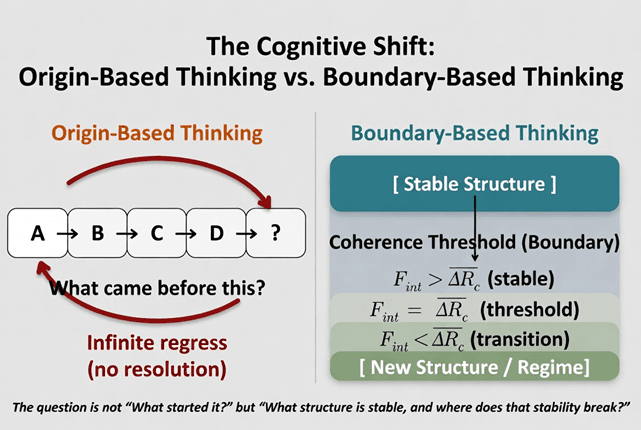
From Beginnings to Boundaries: A Cognitive Shift in Understanding Abstract Concepts

From Beginnings to Boundaries: A Cognitive Shift in Understanding Abstract Concepts

Using a simple childhood observation as the starting point, we show how shifting from origin-based to boundary-based thi

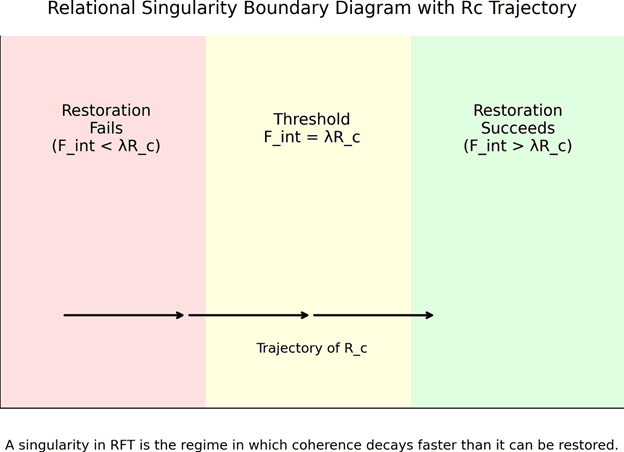
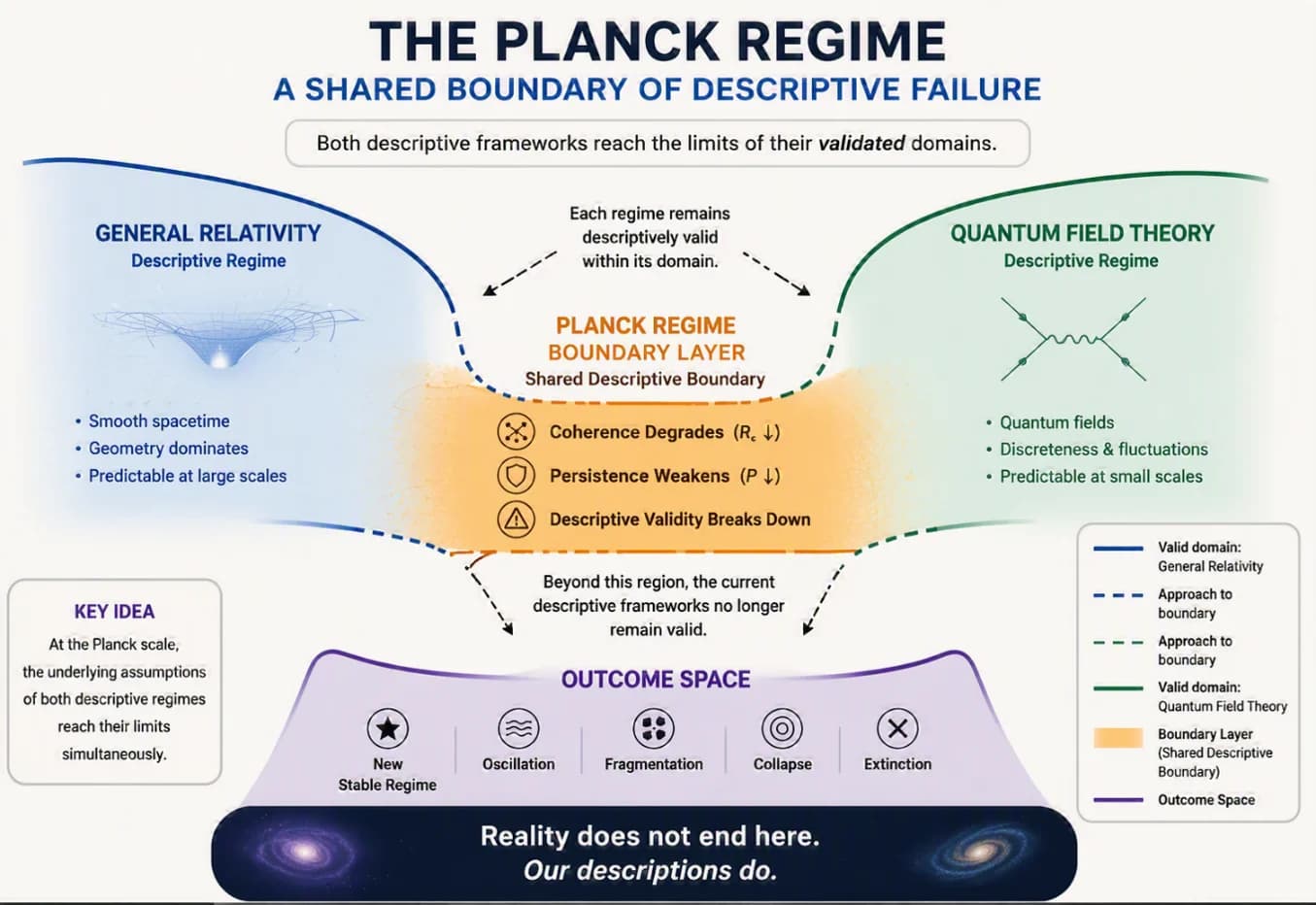
Relational Singularities: Why Restoration Failure, Not Physics Breakdown, Defines the Boundary of Coherence

Relational Singularities: Why Restoration Failure, Not Physics Breakdown, Defines the Boundary of Coherence

In many areas of physics, the word “singularity” implies the breakdown of equations — an undefined point where the mathe

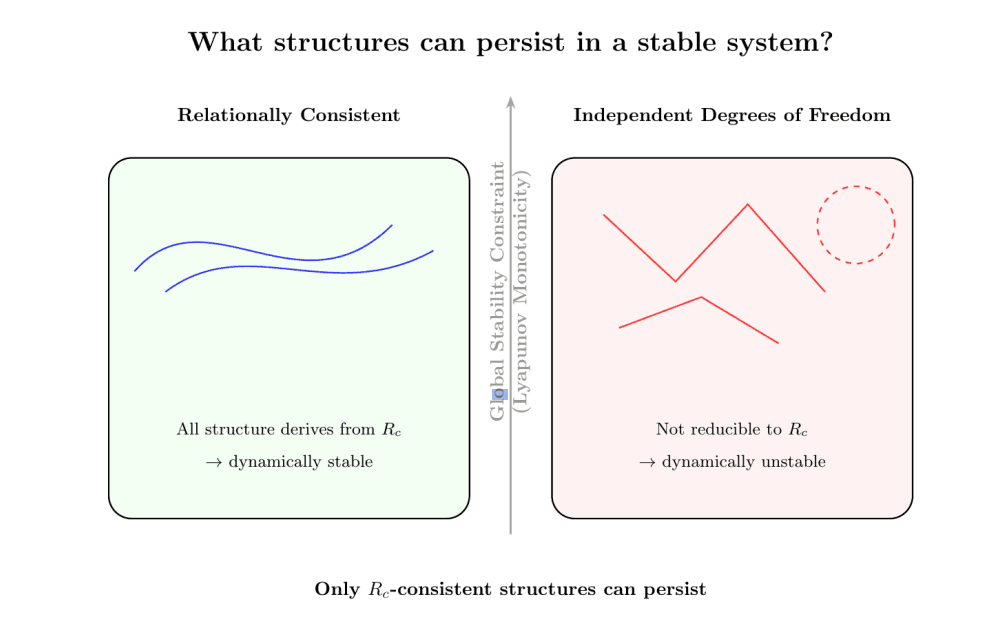
Why a Stable Universe Cannot Support Unnecessary Structure

Why a Stable Universe Cannot Support Unnecessary Structure

Modern physics often assumes that the complexity we observe in the universe reflects an underlying complexity in its fun

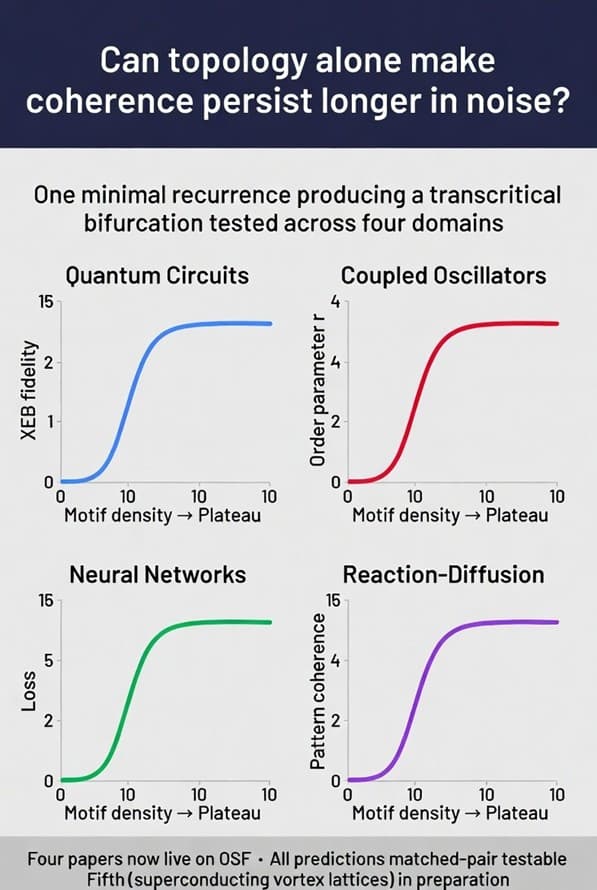
Can Topology Delay Coherence Decay in Noisy Systems? A Minimal Recurrence and a Falsifiable Test Across Quantum, Classical, and Computational System

Can Topology Delay Coherence Decay in Noisy Systems? A Minimal Recurrence and a Falsifiable Test Across Quantum, Classical, and Computational System

Many physical and computational systems exhibit a familiar behavior: ordered states gradually decay in the presence of n